How to Choose a Chest Band Heart Rate Monitor in 2026?
Choosing a Chest Band Heart Rate Monitor in 2026 is not simply about finding the newest sensor. It is about finding reliable data when your shirt is soaked, your breathing is heavy, and your phone is several metres away. A good monitor should sit firmly below the chest muscles, record steady readings, and connect easily with your watch, bike computer, or training app. Comfort matters too. A strap that rubs after twenty minutes may ruin an otherwise excellent workout.
Professor Seppo Säynäjäkangas, founder of Polar, described the principle clearly: “Heart rate is the best indicator of exercise intensity.” That idea still guides smart buying decisions. Look for dependable electrical sensors, dual Bluetooth and ANT+ support, washable straps, strong battery life, and clear compatibility information. Some 2026 models add internal memory, running dynamics, or improved workout analytics. These features can help, but they should not distract from measurement quality.
Your training needs should shape the choice. Runners may value a lightweight strap and stable interval data. Cyclists may need simultaneous connections to several devices. Swimmers require special attention to water resistance and onboard storage. People with sensitive skin should inspect the fabric and buckle design before buying. No device is perfect. Optical watches can be more convenient, while chest sensors often respond faster during sudden intensity changes. Even chest readings can suffer from poor contact, a loose fit, or a weak battery. This guide will compare those practical details, explain common specifications, and help you choose with evidence rather than attractive claims. Always treat consumer readings as fitness information, not a medical diagnosis.
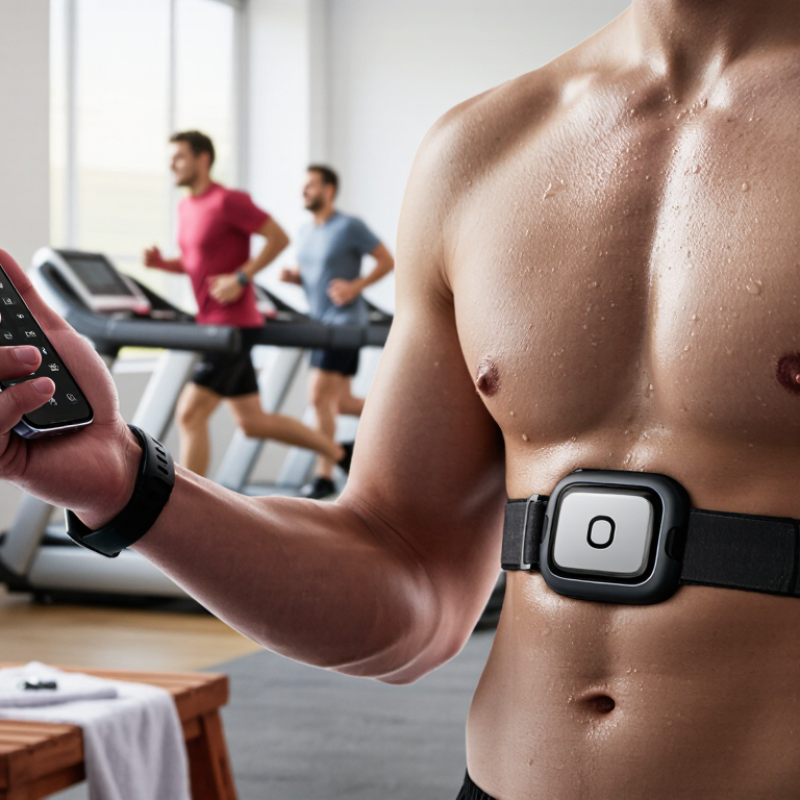
What a Chest Band Heart Rate Monitor Measures
How to Choose a Chest Band Heart Rate Monitor in 2026?
A chest band heart rate monitor measures the heart’s electrical activity through skin-contact electrodes. It records beats per minute and the time between beats, called R-R intervals. These readings can support heart-rate variability analysis, training zones, and recovery tracking. It does not directly measure oxygen, lactate, stress, or calories. Calorie figures remain estimates, even when the screen looks impressively exact.
The 2024 ACSM Worldwide Survey ranked wearable technology as the leading fitness trend. Popularity, however, does not guarantee accuracy. A chest band usually responds faster than wrist-based optical sensors during sprints, cycling, or interval training. A secure fit matters. Sweat, dry skin, movement, and a stretched strap can create noisy readings. WHO’s 2020 physical activity guidelines recommend 150–300 minutes of moderate activity weekly, but a monitor cannot decide whether your body feels ready. That judgment still belongs to you.
Tips: Choose a monitor that records R-R intervals if HRV matters. Moisten the contact points before training. Wear the band firmly, but not painfully, below the chest muscles. Compare unusual readings with your pulse manually, and question sudden numbers instead of obeying them. Calibration is often overlooked.
Key Features to Compare Before Buying
A chest band heart rate monitor should feel secure without making breathing uncomfortable. During a hard interval, the sensor must stay against your skin, not bounce below your chest. Choose an adjustable strap with soft, washable fabric and a stable electrode area. A correct fit matters more than a long feature list.
Compare signal quality carefully. Bluetooth and ANT+ support can connect the monitor to watches, cycling computers, and training apps. Dual transmission is useful when you switch devices. Check whether the monitor stores workouts internally, especially when you train without a phone. Reliable readings should respond quickly during sprints and recoveries, unlike wrist sensors that may lag with sudden effort. Water resistance also matters for sweat and outdoor rain. Still, no device is perfect. Heavy moisture, dry skin, or a loose strap can create strange spikes.
Battery design deserves practical attention. A replaceable coin cell may be easier to maintain than a sealed rechargeable unit, but charging is more convenient for frequent users. Review the stated battery life, charging method, warranty, and replacement strap availability. I once ignored strap comfort and stopped wearing a monitor after several sessions. That was a poor buying decision. Check app compatibility before purchasing, and read independent testing when possible. Health conditions can affect heart rate readings, so training data should not replace professional medical advice.
How to Choose a Chest Band Heart Rate Monitor in 2026?
Key features to compare before buying. Use these practical benchmarks to evaluate comfort, connectivity, durability, and measurement responsiveness.
The benchmark values reflect common specifications and practical buying targets for modern chest-band heart rate monitors. Prioritize electrical sensing, dual wireless connectivity, at least 5 ATM water resistance, and approximately one year of replaceable-battery life when available.
Wireless Compatibility and Data Accuracy
Choosing a chest band heart rate monitor in 2026 requires more than checking its advertised range. Wireless compatibility matters during every workout. Confirm that the band supports the connection your watch, phone, or cycling computer uses. Bluetooth is widely supported, while some training devices require another wireless standard. Multiple connection support can be useful when recording on two devices. Check the number of simultaneous connections before buying.
Data accuracy depends on contact, signal quality, and the monitor’s sensor design. A chest band measures electrical heart activity, so it often responds faster than wrist-based optical sensors during intervals. The band should sit firmly below the chest muscles, with the electrodes lightly moistened before exercise. Dry skin can cause delayed readings, especially in cold weather. Sweat may improve contact, but excessive movement can still create spikes. Keep the band clean and inspect its fastening area regularly.
I once trusted a smooth graph too quickly. That was a mistake. Compare unusual readings with your perceived effort and, when possible, a second reliable measurement. Look for independent testing against clinical ECG equipment, not only laboratory claims from the seller. Read the device’s connection limits, supported systems, and data export options carefully. Accuracy is not permanent. Battery condition, worn electrodes, and poor storage can gradually reduce reliability. Even careful testing has limits.