
How to Find Top Glutamine Gummies Suppliers in China?

Finding reliable Glutamine Gummies suppliers in China requires more than comparing catalog prices. Buyers need evidence, clear communication, and practical quality checks. In real sourcing projects, a polished website proves very little. A dependable manufacturer should explain its production process, ingredient sources, testing methods, and quality controls. Request a current Certificate of Analysis for each batch. It should show glutamine potency, microbial limits, heavy metals, allergens, and other relevant specifications. Independent laboratory verification adds confidence. Confirm the supplier’s manufacturing licenses, facility standards, and export experience for your target market. Requirements may differ by country, so professional regulatory review remains important.

Product development deserves equal attention. Check the glutamine amount per serving, gummy weight, sugar content, flavor system, and ingredient compatibility. Ask for stability data, especially if the product will face warm warehouses or long shipping routes. Order samples and inspect their texture, taste, color consistency, packaging seals, and label accuracy. Small details matter. A gummy that melts in transit can damage an otherwise strong launch. Discuss minimum order quantities, lead times, mold charges, payment terms, and replacement policies before signing. Request factory photos, video evidence, or an independent audit when appropriate. Some suppliers promise more than they can consistently deliver. That assumption can fail. A careful comparison of documents, samples, factory capability, and communication habits will help identify a trustworthy Glutamine Gummies partner. No supplier search is perfect, but disciplined verification reduces avoidable risks.
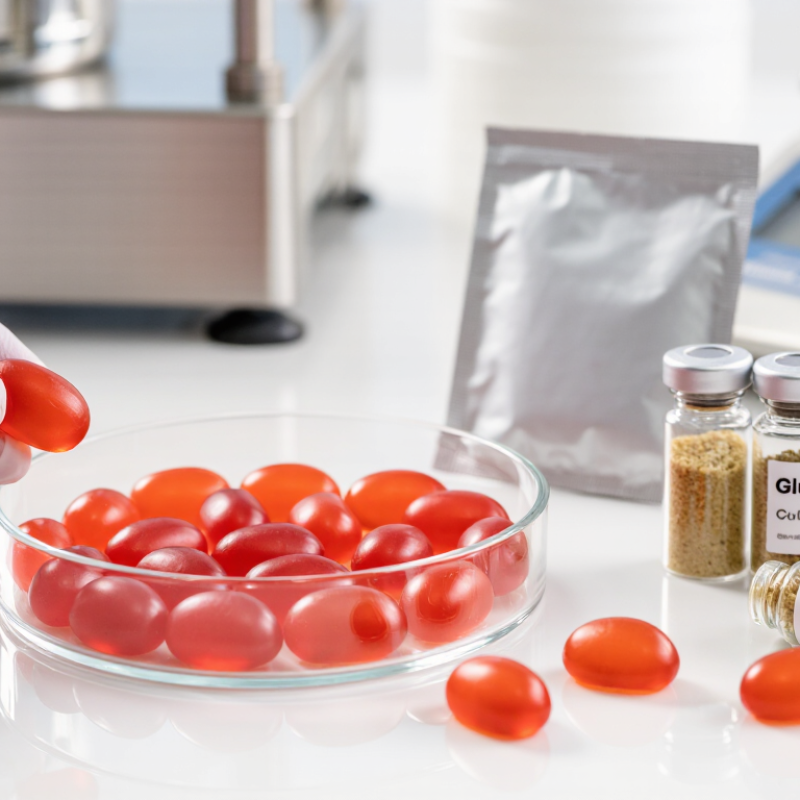
How to Find Top Glutamine Gummies Suppliers in China?

Define Product Targets: 5 g per Serving and ≥99% L-Glutamine Purity

When searching for top glutamine gummy suppliers in China, define the product target before discussing price. Each serving should provide 5 g of L-glutamine, while the raw material should show at least 99% purity. Confirm whether this percentage refers to an HPLC assay, not simply a supplier’s specification sheet. Ask for a recent certificate of analysis, batch number, testing date, and laboratory method. A serious supplier should explain these details clearly.

The 5 g target also affects gummy size, serving count, texture, and flavor. For example, six gummies may be more practical than two oversized pieces. Request a pilot sample with the exact active dosage, not a similar formula. Check weight variation between gummies, moisture control, taste stability, and packaging performance after transport. During supplier reviews, I would compare independent test results with the factory’s COA. One document is not enough. I once focused too heavily on purity and overlooked serving practicality. That was a useful mistake.

Tips: Ask for three production samples from different batches. Verify L-glutamine identity and purity through an independent laboratory. Review the supplier’s quality system, traceability records, and production controls. Also confirm whether the finished gummy delivers 5 g per serving after storage, because potency can change over time. Keep the requirement written in the specification: “5 g L-glutamine per serving, raw material purity ≥99% by validated assay.” Vague wording creates avoidable disputes.

Screen Suppliers Using GMP, HACCP, and ISO 22000 Certification Criteria

How to Find Top Glutamine Gummies Suppliers in China?

A reliable supplier should provide valid GMP, HACCP, and ISO 22000 certificates. These documents must match the actual factory, product scope, and production address. During supplier screening, I request complete certificates, not cropped images. I also check the issuing body's accreditation and certificate validity. Small details matter.

GMP shows whether the factory controls hygiene, equipment, staff training, and batch records. For glutamine gummies, review ingredient weighing and dosage uniformity procedures. Ask how workers manage moisture, microbial risks, and allergen cross-contact. HACCP should identify hazards from raw materials through packaging. The plan should include monitoring limits and corrective actions. Generic paperwork is a warning sign.

ISO 22000 evaluates the broader food safety management system. Ask for recent audit findings and evidence of closed corrective actions. Request a sample batch record, laboratory report, and stability data. The test report should identify methods, specifications, and the tested lot. I would also compare samples from different batches. One attractive sample proves little. Certificates alone cannot confirm consistent quality. Supplier responses may be incomplete, and that deserves a second review. A remote audit helps, but an on-site inspection gives stronger evidence. Check whether the factory can explain its process clearly, without relying on prepared answers.

How to Find Top Glutamine Gummies Suppliers in China? - Screen Suppliers Using GMP, HACCP, and ISO 22000 Certification Criteria

Screening Dimension What to Require Evidence to Verify Recommended Pass Standard Priority
GMP compliance A documented system covering personnel hygiene, sanitation, production controls, equipment maintenance, and batch records. Current GMP certificate, issuing-body details, scope, facility address, validity period, and latest audit findings. Certificate is current, the facility address matches the production site, and dietary-supplement manufacturing is within scope. Critical
HACCP system A hazard analysis and preventive-control plan addressing biological, chemical, and physical hazards. HACCP certificate or validated plan, hazard analysis, critical control points, monitoring logs, and corrective-action records. All relevant process steps are covered, monitoring limits are defined, and corrective actions are documented. Critical
ISO 22000 certification A food-safety management system integrating prerequisite programs, hazard controls, communication, and continual improvement. Certificate number, accredited certification body, standard version, scope, surveillance status, and expiry date. Certificate is issued by a properly accredited body and specifically covers the relevant food or supplement manufacturing activity. Critical
Glutamine identity and assay The finished product must contain the declared form and amount of L-glutamine, subject to the applicable market requirements. Recent certificate of analysis, validated test method, batch number, specification, and independent laboratory results where available. Identity is confirmed and assay results meet the approved product specification for every commercial batch. Critical
Microbiological safety Controls for total microbial count, yeast and mold, specified pathogens, and other limits required by the destination market. Batch-specific microbiological test report from an appropriately qualified laboratory. Results comply with the approved specification and applicable destination-country regulations. Critical
Heavy metals and contaminants Testing for lead, arsenic, cadmium, mercury, and other contaminants relevant to ingredients and market regulations. Recent third-party laboratory report, test method, detection limits, sample identification, and laboratory accreditation details. All results are below the applicable legal or customer specification limits. Critical
Allergen and cross-contact control Documented controls for shared equipment, allergen storage, cleaning validation, labeling, and changeover procedures. Allergen matrix, sanitation records, cleaning validation, production-flow diagram, and label review procedure. Risks are identified, cleaning controls are validated, and allergen statements match the formulation and facility profile. High
Gummy formulation control Controlled specifications for active content, pH, moisture or water activity, texture, flavor, color, and serving size. Master formula, finished-product specification, stability data, in-process checks, and sample approval records. Formula, process parameters, and release tests are documented and consistently applied across production batches. High
Stability and shelf life Shelf-life evidence under defined storage conditions, including protection from heat, humidity, light, and oxidation where relevant. Real-time or accelerated stability protocol, time-point results, packaging configuration, and proposed expiry period. The proposed shelf life is supported by documented data for the final formulation and final packaging. High
Traceability and recall readiness A system linking raw materials, packaging, production records, finished batches, customers, and distribution records. Lot-coding procedure, mock-recall results, supplier records, retention-sample policy, and complaint-handling procedure. A complete forward-and-backward trace can be demonstrated through a documented mock recall. High
Export and labeling readiness Capability to provide documentation and labels that comply with the laws of the intended destination market. Ingredient statement, nutrition or supplement facts panel, claims review, packaging specifications, country-of-origin information, and export documents. Label and claims are reviewed against destination-market requirements before mass production. High
Suggested screening rule: Reject any supplier that cannot provide verifiable, current evidence for GMP, HACCP, ISO 22000, product identity, microbiological safety, and contaminant testing. Certification should be checked against the issuing body's records and the exact manufacturing-site scope.

Verify COAs for Assay, Heavy Metals, and Microbial Limits in Every Batch

How to Find Top Glutamine Gummies Suppliers in China?

The 2023 Consumer Supplement Survey from the Council for Responsible Nutrition reported that 74% of U.S. adults use dietary supplements. This level of consumer reliance makes batch documentation more important than attractive packaging. When screening Chinese glutamine gummy suppliers, request the complete COA for every production lot, not a generic sample report.

Check the lot number, test date, laboratory identity, and sampling method. The assay should confirm glutamine content against the stated specification, using a validated method such as HPLC where appropriate. A passing result without a clear method is incomplete evidence. Heavy-metal testing should cover lead, cadmium, arsenic, and mercury, with limits matched to the destination market. WHO and FAO expert evaluations show that contaminant exposure must be controlled through risk-based limits, not visual inspection.

Microbial results deserve equal attention. Ask for total aerobic counts, yeast and mold, and relevant pathogens under recognized methods, including USP <61> and <62> when applicable. Gummies also retain moisture, so water activity and preservative controls may need review. FDA 21 CFR Part 111 requires dietary supplement specifications, testing, and documented quality controls for products entering the U.S. market. A polished PDF can still hide weak sampling. I would verify the laboratory directly and compare the COA with the retained sample, packaging code, and manufacturing record. Suppliers who resist batch-level verification are difficult to qualify reliably.

How to Find Top Glutamine Gummies Suppliers in China?

Verify every batch COA for assay, heavy metals, and microbial limits before approving a supplier.

A reliable supplier should provide batch-specific test results covering identity, assay, heavy metals, and microbiological quality. Common review checkpoints include assay against the label claim, lead and other heavy metals reported in mg/kg, and microbial results reported in CFU/g or as absence in the tested sample. Acceptance limits can vary by destination market, product formulation, and customer specification, so confirm the applicable regulatory standard before release.

Compare MOQ, Production Capacity, Lead Time, and 100% Batch Traceability

How to Find Top Glutamine Gummies Suppliers in China?

China’s supplement manufacturing base is broad, but supplier quality varies sharply. Grand View Research valued the global dietary supplements market at about USD 177.5 billion in 2023, showing strong demand and intense competition. For glutamine gummies, compare MOQ against your sales forecast, not only the lowest quotation. A supplier offering 10,000 jars may suit a test launch. Another requiring 50,000 jars may provide better unit economics, but create costly inventory risk.

Ask for documented monthly capacity, recent production records, and equipment details. A stated capacity of 20 million gummies means little without shift data or audited utilization.

Lead time should separate formulation approval, raw material purchasing, production, testing, and shipment. A realistic schedule may require 35 to 60 days. Confirm whether stability testing or flavor revisions add delays. Small details matter.

Traceability deserves strict attention. Each batch should connect raw material lots, operators, processing dates, test results, packaging codes, and shipment records. ISO 22000 and HACCP systems support control, but certificates alone do not prove daily discipline. Request a sample batch record and a mock recall exercise. It may expose weak links. I would also verify identity, potency, microbiological results, and heavy-metal testing through independent laboratories. A cheap MOQ is not always economical. Neither is impressive capacity. Supplier comparisons remain incomplete until evidence matches the promise.

Confirm U.S. and EU Compliance Through Third-Party Testing and Label Review

Finding reliable glutamine gummies suppliers in China requires more than comparing prices or reviewing polished websites. Compliance evidence should guide your sourcing decisions. Ask each supplier for recent, lot-specific reports from an independent laboratory accredited to ISO/IEC 17025 standards. The report should confirm glutamine identity and potency, plus microbiological safety, heavy metals, allergens, and other relevant contaminants. Check the laboratory’s name, testing date, sample code, and product description carefully. A generic certificate is weak evidence.

The report must match the gummies you plan to purchase. Request production samples, then compare their color, texture, taste, packaging, and declared dosage with the tested sample. Testing should cover the finished gummy, not only the raw material.

Keep samples from each production lot when possible. Small details matter. I have seen sourcing teams trust a certificate without checking batch numbers. That mistake can create expensive problems later.

Label review is equally important for U.S. and EU distribution. Examine the ingredient list, serving size, net quantity, allergen statement, warnings, storage instructions, and responsible business information. Review every structure or performance claim with a qualified regulatory specialist, because acceptable wording differs between markets. EU requirements can also vary by member state and product classification. Translation quality matters too. One awkward phrase may change the meaning of a warning. Third-party testing supports confidence, but it does not replace factory audits, document verification, or ongoing market surveillance. Supplier cooperation is valuable, yet independent verification remains essential.

Cell Projects Ltd
Privacy Overview

This website uses cookies so that we can provide you with the best user experience possible. Cookie information is stored in your browser and performs functions such as recognising you when you return to our website and helping our team to understand which sections of the website you find most interesting and useful.