How to Choose an Oil Pumping Unit in 2026?
Choosing an Oil Pumping Unit in 2026 is not just a matter of comparing horsepower or purchase prices. The right choice depends on the job it must perform, the oil’s properties, and the conditions at the installation site. A unit moving cool, low-viscosity oil through a short line faces different demands from one handling heavier fluid across a remote field. Small differences matter.
Start with the operating requirements. Estimate the required flow rate and discharge pressure, then check the fluid’s viscosity, temperature, and possible solids content. Confirm that the pump materials suit the oil and the surrounding environment. A mismatch can mean excess wear, leaks, or frequent maintenance. It can also mean wasted energy. Not ideal.
The site deserves equal attention. Look at available power, foundation strength, weather exposure, access for service, and space for safe operation. Ask how the unit will be monitored and which parts are practical to keep in stock. Modern controls can provide useful operating data, but they cannot compensate for an incorrect pump selection or weak maintenance planning. A spreadsheet alone will not settle every choice.
This guide explains how to compare pump types, sizing, materials, efficiency, controls, and lifecycle costs. It also considers supplier documentation, service support, and realistic operating limits. Use manufacturer performance curves and qualified engineering advice to verify shortlisted options. The best Oil Pumping Unit is not necessarily the largest or newest. It is the one that reliably meets measured needs, with room for conditions that are less predictable than the specification suggests.
Define Production Requirements and Well Conditions
Define the production target before comparing pumping units. Use stabilized tests, not a brief peak, and record both gross fluid and net oil rates. A well producing 100 barrels of fluid daily at 40% water cut needs a different plan from one producing 100 barrels of oil. Note the expected rate range, operating hours, and any forecast decline. One test can mislead.
Then describe the well. Record pump-setting depth, tubing size, deviation, casing dimensions, fluid level, gas-to-oil ratio, viscosity, and solids. These details affect displacement, rod loading, gas interference, and wear.
EIA’s 2024 Drilling Productivity Report put Permian crude output near 6 million barrels per day, but basin totals are not well-design rates. Use them as context, not a substitute for well tests. API Spec 11E provides structural rating guidance for pumping units; a compliant rating alone does not confirm the unit suits a particular load cycle. Check peak and average loads against the expected fluid column and available power.
I would question any sizing based on one “typical” rate. Recheck assumptions when water cut or fluid level changes.
Compare Oil Pumping Unit Types and Operating Principles
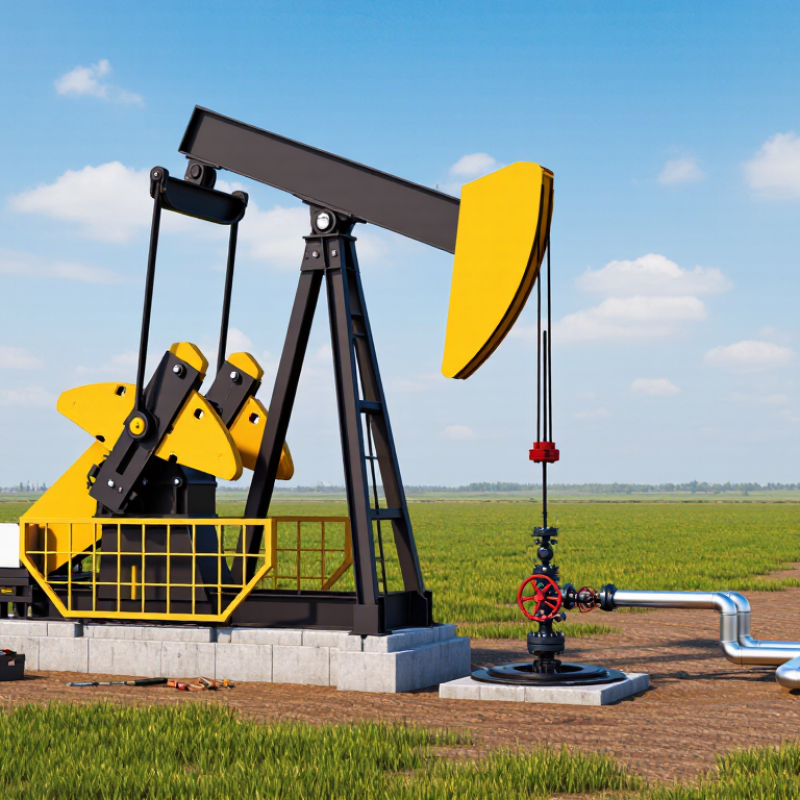
Oil pumping units do not all move fluid in the same way. A beam unit uses a motor, gearbox, crank, and walking beam to turn rotation into repeated up-and-down rod motion. The polished rod then drives a downhole reciprocating pump. This arrangement is familiar and relatively easy to inspect, but its large moving parts need clearance and regular checks for bearings, belts, and alignment. Watch a full stroke: a jerky counterweight or uneven rod movement can reveal imbalance before it becomes a costly failure. Simple, but not effortless.
Hydraulic units use pressurized fluid and a cylinder to move the rod, often allowing a compact layout and adjustable stroke settings. They can suit sites where space is tight, though pumps, seals, hoses, and fluid temperature add maintenance points. Direct-drive or linear systems create reciprocating motion without the same crank-and-beam train. Fewer mechanical links may reduce wear, yet controls and electrical supply become more important. For a fair comparison, match rated load, stroke length, cycle speed, well depth, and expected service access to the well’s actual conditions. Catalog figures help, but field data should decide. I’d still verify the duty cycle; this part is easy to overlook.
Assess Site Constraints, Power Needs, and Environmental Factors
How to Choose an Oil Pumping Unit in 2026?
Assess Site Constraints, Power Needs, and Environmental Factors
Start with the well pad, not the catalog. Measure available space, ground stability, access roads, and overhead clearance. A unit that fits on paper may be difficult to install beside a drainage ditch or beneath power lines. Check the expected load and operating schedule, then compare them with the unit’s performance data. Starting current matters too; a weak supply can cause nuisance trips or require electrical upgrades. Small details count.
Next, consider the site’s conditions. Dust, salt spray, humidity, and temperature swings can affect motors, controls, and exposed components. In cold regions, ask how lubrication and startup behave at low temperatures. Where water or sensitive soil is nearby, plan for leak detection and practical spill containment. Noise may also matter if workers or nearby residents spend time close to the equipment. Measure it at the site, not only from a specification sheet.
Maintenance access is easy to overlook. Leave room for inspection, lifting equipment, and safe isolation before service. Confirm that replacement parts and qualified technicians can reach the location without long delays. I have seen a technically suitable choice become a poor fit because routine access was awkward. That judgment can be imperfect; actual operating records should guide it. Revisit the choice after seasonal conditions or production needs change.
How to Choose an Oil Pumping Unit in 2026?
Compare estimated daily electricity use across common motor ratings when assessing power needs.
Estimates assume continuous operation for 24 hours at an average motor load of 65%; actual consumption depends on well conditions, operating schedule, and equipment efficiency. Before selecting a unit, also check site access and foundation limits, available electrical supply, noise requirements, and local environmental conditions.
Verify 2026 Standards, Maintenance Support, and Supplier Qualifications
Choosing an oil pumping unit in 2026 means checking more than its rated capacity. Ask the supplier to identify the current editions of applicable API, ISO, and local requirements for the unit’s design and installation. Confirm that the proposed configuration matches your well conditions, operating loads, and site environment. Request signed calculations, load charts, material traceability, and inspection records. Get the records. A tidy certificate folder can still leave gaps, so verify that documents match the exact equipment being offered.
Maintenance support deserves the same scrutiny as the purchase price. Ask what parts are stocked, where they are held, and how quickly technicians can reach your site. Review the service schedule, lubrication points, recommended spare-parts list, and written response commitments. Look for practical details: Can a technician help diagnose unusual gearbox noise over the phone? Is a replacement belt available locally? Small delays matter. That matters.
Check supplier qualifications through recent project references, documented quality controls, and evidence of relevant personnel training. Where possible, speak with operators using similar units under comparable conditions. Ask how commissioning, operator instruction, and warranty claims are handled. A site visit or independent inspection can reveal details paperwork misses, such as poor access to service points. No checklist replaces a site-specific engineering review; I would be cautious about treating any single certificate as proof of overall suitability.