
Top Dental Surgery Lighting China Manufacturers?

Choosing among the Top Dental Surgery Lighting China Manufacturers requires more than comparing brightness or factory prices. Dental lighting directly affects shade recognition, cavity visibility, clinician posture, and operating-room efficiency. The World Health Organization’s Global Oral Health Status Report 2022 estimates that nearly 3.5 billion people experience oral diseases worldwide. This growing treatment demand increases the need for dependable clinical equipment, including well-designed dental operating lights.

The term Dental Surgery Lighting China covers a broad manufacturing field. It includes ceiling-mounted systems, mobile lights, sensor controls, camera integration, and LED units with adjustable color temperatures. Industry forecasts from Grand View Research and Fortune Business Insights indicate continued growth in dental equipment and LED medical lighting. However, their market boundaries and estimates differ. Buyers should treat these figures as directional, not absolute.

Quality verification must remain practical. Look for documented compliance with IEC 60601-1 and IEC 60601-2-41, where applicable. ISO 13485 certification can also indicate a controlled medical-device quality system. Ask manufacturers for photometric test reports, shadow-reduction data, sterilizable handle details, and warranty terms. A focused beam should illuminate a molar without creating harsh glare across the clinician’s face.

Real experience matters. A showroom demonstration may hide installation problems, ceiling-load limits, or difficult cleaning procedures. Request videos from operating installations and inspect service response times. Some supplier claims sound impressive, yet independent testing may reveal differences. This guide compares leading Chinese manufacturers through product performance, certification evidence, customization capability, after-sales support, and purchasing transparency. The ranking is useful, but not final. Your clinical workflow should decide.
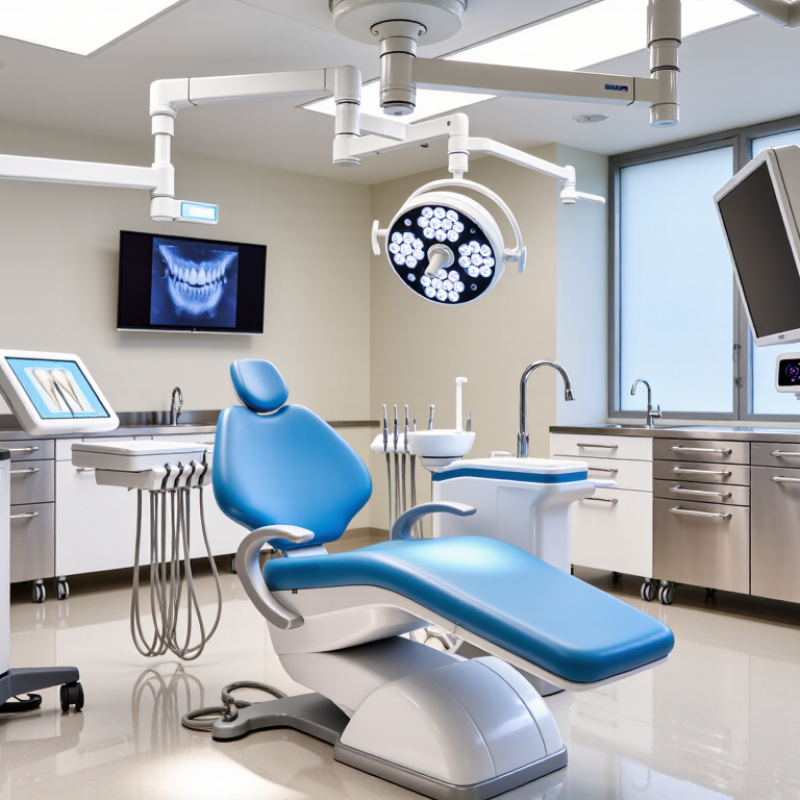
Top Dental Surgery Lighting China Manufacturers?

What Defines High-Quality Dental Surgery Lighting?

When evaluating dental surgery lighting from China, quality begins with clinical performance, not polished product photos.
A high-quality lamp delivers a stable, shadow-controlled field across the patient’s mouth. Its color rendering should reveal tissue differences without making every surface look unnaturally bright. In daily practice, I also check beam adjustment with gloved hands. Controls must respond smoothly, even when the operator cannot look away.

A dependable manufacturer documents testing, traceability, and material selection. Ask for photometric data, electrical safety reports, and evidence of quality-system control. Standards such as IEC 60601-1 and ISO 9680 can help buyers compare products objectively. Heat management matters too. Comfort matters. A cool handle and low radiant heat support comfort during longer procedures. Sealed joints, cleanable surfaces, and durable positioning arms reduce contamination risks and maintenance delays. These details often matter more than decorative housing.

Installation support is another practical test of supplier reliability. Clear mounting instructions, spare-part access, and responsive technical communication protect clinic workflow. Warranty terms should state coverage plainly, including arms, sensors, LEDs, and power modules. A specification can look excellent while adjustment becomes loose after repeated use. That should make buyers cautious. No lamp is perfect. Glare, over-bright settings, or poor room integration can still affect visibility. A small clinical trial involving dentists and assistants may reveal weaknesses that a factory sample hides. Good evaluation remains careful, measurable, and open to revision.

Key Features of China’s Leading Dental Light Manufacturers

Top Dental Surgery Lighting China Manufacturers?

China’s leading dental light manufacturers now compete through optical precision, not only lower pricing. Their strongest models typically offer 30,000–50,000 lux, shadow reduction, adjustable colour temperature, and touch-free controls. These features help clinicians distinguish enamel, soft tissue, and restorative materials under changing procedures. Small details matter.

ISO 9680:2014 defines performance and safety requirements for dental operating lights. IEC 60601-1 also addresses essential safety for medical electrical equipment. Experienced buyers should request test reports, photometric curves, electrical safety files, and calibration records. A product catalogue is not enough. Some suppliers describe “shadowless” performance without explaining the testing method, which deserves careful review.

Market pressure is increasing. Fortune Business Insights estimated the global dental equipment market at approximately US$8.4 billion in 2024, with continued growth expected through 2032. This expansion encourages Chinese manufacturers to improve LED consistency, heat management, sterilizable handles, and mounting stability. Better manufacturers also provide installation guidance and spare-part support, which can reduce downtime in busy clinics. However, brightness alone can mislead. Excessive intensity may create glare and visual fatigue, especially during long procedures. Buyers should compare illumination uniformity, colour rendering, arm movement, warranty terms, and after-sales response. Independent verification remains wise, because published specifications may not fully represent daily clinical performance.

Top Dental Surgery Lighting China Manufacturers? - Key Features of China’s Leading Dental Light Manufacturers

Evaluation Dimension Typical Specification or Data Practical Value in Dental Surgery Recommended Verification Point
Illuminance Commonly adjustable from approximately 8,000 to 50,000 lux at the specified measuring distance Provides adequate illumination for examinations, restorative procedures, and oral surgery Check the test distance, beam diameter, tolerance, and measurement method rather than relying only on the maximum value
Color Temperature Typically offered in the range of approximately 4,000–5,500 K; some models provide selectable color modes Supports visual differentiation of tooth structure, soft tissue, and restorative materials Confirm the actual color-temperature range and whether the value changes with dimming
Color Rendering Index Professional dental LED lights commonly specify Ra ≥90; premium configurations may specify higher values Improves the clinician’s ability to judge natural tissue and material colors Request test data for general CRI and, where relevant, special color-rendering indices
Shadow Reduction Multi-LED optical arrangements with overlapping beams are widely used to reduce shadows Maintains visibility when the operator’s hands or instruments partially block the light Review shadow-test results and beam performance at different head and operating positions
Light Field Size Many dental operating lights provide a focused field adjustable around the oral cavity; exact diameter depends on design and distance Helps concentrate illumination on the treatment area without excessive spill into the operator’s eyes Verify the field diameter at the manufacturer’s stated working distance and illuminance level
Brightness Control Continuous or stepped dimming is common, often covering a broad range from low examination light to maximum output Allows fast adjustment for examinations, surgery, documentation, and patient comfort Check control repeatability, minimum stable output, and whether brightness settings are retained after power-off
Composite-Curing Compatibility Some dental lights include a curing-safe mode or reduced blue-light output; implementation varies by model Reduces the risk of premature curing of light-sensitive restorative materials Confirm the spectral output and curing-safe operating procedure with the light-curing material supplier
LED Service Life LED modules are commonly rated at approximately 40,000–60,000 operating hours, subject to thermal conditions Reduces lamp replacement frequency and routine maintenance requirements Ask whether the rating is based on lumen maintenance, failure probability, or a supplier’s estimated lifetime
Heat Management Low-radiant-heat LED designs with passive heat dissipation are widely used Improves patient and operator comfort during extended procedures Request measurements for head-surface temperature and radiant heat under continuous operation
Positioning and Reach Ceiling-mounted, wall-mounted, mobile, and treatment-unit-mounted configurations are commonly available Supports different operatory layouts and improves access to the treatment field Confirm arm reach, rotation angles, mounting load, ceiling height limits, and installation clearances
Handle Hygiene Removable or autoclavable handles are commonly specified; disposable barrier compatibility may also be offered Helps reduce cross-contamination risk and supports efficient operatory cleaning Check the validated autoclave temperature and cycle, chemical resistance, and replacement-handle availability
Control Interface Touch controls, membrane panels, foot controls, and non-contact sensors are used depending on configuration Enables operation while maintaining aseptic working practices Evaluate sensor response, accidental-activation prevention, cleanability, and control durability
Electrical Input Universal-input power supplies commonly support 100–240 V AC and 50/60 Hz, depending on the model Simplifies deployment across different countries and electrical systems Verify rated input, protective-earth requirements, power consumption, plug type, and local installation rules
Medical-Device Safety Professional products may be designed and tested against applicable medical electrical equipment requirements, including IEC 60601-1 and dental-light requirements such as ISO 9680 where applicable Supports electrical safety, risk management, and regulatory acceptance Request valid test reports, certificates, declarations, and the exact model numbers covered by each document
Quality-Control Capability Mature manufacturers typically document incoming inspection, optical testing, electrical safety checks, burn-in, and final inspection Improves consistency between production batches and reduces installation failures Request sample inspection records, calibration status, traceability procedures, and a pre-shipment inspection plan
After-Sales Support Typical support includes installation documentation, spare LED modules or power supplies, troubleshooting guidance, and warranty terms Limits downtime and simplifies maintenance throughout the product lifecycle Confirm warranty duration, spare-parts lead time, technical response time, and availability of local service support

Note: Specifications shown are common industry ranges or evaluation criteria for professional dental operating lights. Exact performance, certifications, and configurations should be verified against the technical documentation for each model.

How to Compare Dental Surgery Lighting Suppliers in China

Comparing dental surgery lighting suppliers in China requires more than checking price and lumen claims. The WHO Global Oral Health Status Report 2022 estimates that nearly 3.5 billion people live with oral diseases. This pressure increases demand for dependable clinical equipment. A supplier should provide test reports, production records, and clear warranty terms, not only attractive photographs.

Request photometric data for illuminance, color temperature, color rendering, and shadow control. ISO 9680:2021 covers dental operating lights, while IEC 60601-1 addresses basic safety and essential performance. Ask whether testing was completed by an independent laboratory. Confirm the report number and product model. Details matter. A mismatched certificate is a warning sign.

During evaluation, inspect arm movement, sterilizable handles, heat near the patient, and light stability after several hours. Compare samples in a simulated treatment room, because showroom brightness can mislead. Check spare-part availability, repair response time, installation guidance, and operator training. Total cost includes downtime, replacement modules, and calibration.

A factory audit can reveal inconsistent assembly or weak quality controls. It is not perfect. Even a capable supplier may communicate poorly after payment. I would score technical compliance separately from sales responsiveness, then record every promise in the contract. One overlooked point remains important: clinical users should test glare and shadow performance, not merely engineers.

Manufacturing Standards, Certifications, and Quality Control

Reliable dental surgery lighting begins with a controlled manufacturing system, not a polished catalog. Qualified Chinese manufacturers should operate under ISO 13485, with documented risks, staff training, and corrective actions. Ask for current certificates, issuing bodies, scope, and expiration dates. Generic reports create doubt.

Electrical safety should reflect IEC 60601-1 and applicable collateral standards. EMC testing supports stable operation near clinical equipment. Photobiological safety, illumination uniformity, color rendering, and shadow control also require measured evidence. Test reports should identify the model, sample, method, limits, and laboratory. For export markets, conformity documentation must match the destination’s requirements.

During a factory visit, inspect incoming LED checks, optical assembly, wiring, grounding, and final burn-in. Serial numbers should connect each lamp to components, test results, and shipment records. Measure the light field. Move the arm repeatedly and examine handle sterilization procedures. Ask how failures are isolated and how complaints reach engineering. Some suppliers meet certification requirements yet provide thin service records. That gap matters. Even strong factories can show inconsistent color temperature or incomplete calibration notes. Treat these findings as corrective-action signals, not minor paperwork. An honest manufacturer explains limits, variation, and retesting plans.

Top Dental Surgery Lighting China Manufacturers: Standards, Certifications, and Quality Control

This chart shows the publication year of major international standards commonly used when evaluating dental and surgical lighting. Buyers should verify the manufacturer’s current certificates, test reports, risk-management records, photobiological-safety assessment, and production inspection procedures against the applicable standards.

References: ISO 9680:2021, ISO 13485:2016, IEC 60601-1:2020 consolidated edition, IEC 60601-2-41:2021, and IEC 62471:2006.

Selecting the Right Chinese Manufacturer for Your Dental Clinic

Choosing the right Chinese dental surgery lighting manufacturer requires more than comparing prices. Your clinic needs stable illumination, precise positioning, and dependable after-sales support. Examine the manufacturer’s production experience, quality-control records, and export history. Ask for test reports, technical drawings, installation instructions, and warranty terms. A serious supplier should explain light intensity, color temperature, shadow control, and arm movement clearly.

Arrange a video factory tour or request detailed production photographs. Inspect the lamp head, handles, joints, control panel, and cable protection. Ask how surfaces tolerate routine cleaning and disinfection. Confirm whether the lighting system suits your dental chair, ceiling height, and power supply. Request a sample or demonstration before placing a larger order. A low quotation may look attractive, but weak documentation can create expensive problems later. I would not pretend every evaluation is perfect; some defects appear only after months of daily adjustment.

Tips: Compare at least three manufacturers. Check independent customer references. Confirm spare-part availability and response times. Keep every specification in writing. Test brightness at the operating field, not only in a showroom. Discuss installation training, packaging protection, and replacement procedures before payment. The best manufacturer is not always the cheapest. It is the supplier whose product, evidence, and communication remain reliable under real clinical pressure.

Cell Projects Ltd
Privacy Overview

This website uses cookies so that we can provide you with the best user experience possible. Cookie information is stored in your browser and performs functions such as recognising you when you return to our website and helping our team to understand which sections of the website you find most interesting and useful.