
China Top Distribution Board Manufacturers for Global Buyers
China has become a major sourcing base for low-voltage electrical equipment, including the Distribution Board. Global buyers now expect more than competitive pricing. They need stable quality, verified testing, traceable components, and responsive technical support.
Market data supports this growing demand. Grand View Research reports continued expansion in the global switchgear market, driven by urbanisation, renewable energy projects, and grid modernisation. MarketsandMarkets also identifies industrial automation, commercial construction, and power infrastructure as important demand drivers. These reports do not always separate distribution boards from wider switchgear categories. That limitation matters.
A Distribution Board is not merely a metal enclosure with breakers. It controls current paths, protects circuits, and supports safer maintenance. The wrong busbar rating can create heat. Poor terminal design can cause loose connections. A missing test record may delay an entire project.
John Cadick, author of The Electrical Safety Handbook, has stated, “Electrical safety is a process, not a product.” Buyers should remember this when comparing China’s top manufacturers. Factory audits, IEC 61439 testing, incoming-material inspection, and sample verification should guide the decision. Product photographs are not enough.
The strongest suppliers usually provide clear drawings, short-circuit ratings, enclosure specifications, and documented quality procedures. Some claims still require closer checking. Certification marks may cover a product family, not every custom configuration.
This guide examines leading Chinese manufacturers for global buyers. It considers engineering capability, production experience, export performance, customization, and after-sales support. The aim is practical selection, not a simple ranking. Reliable procurement starts with uncomfortable questions.
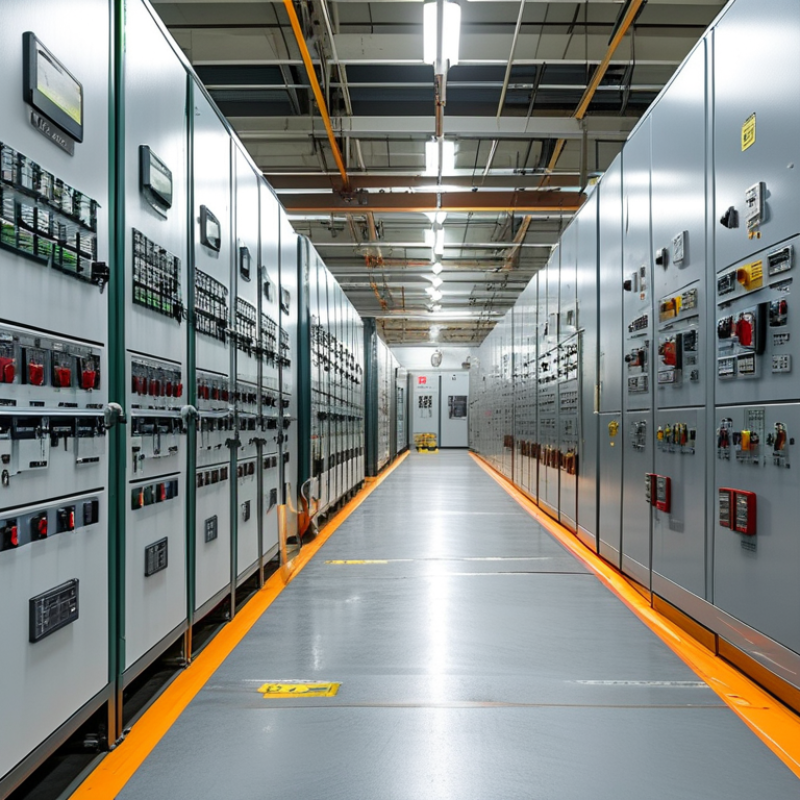
What Distribution Boards Are and Why China Is a Major Supply Base
China Top Distribution Board Manufacturers for Global Buyers
A distribution board is the control point for a low-voltage electrical system. It receives incoming power and divides it into protected circuits. Busbars, circuit breakers, terminals, and an enclosure work together inside it. In a real installation, this panel may serve a home, factory, office, or solar facility. Its job sounds simple. Yet poor thermal design can cause overheating, nuisance trips, or equipment damage. IEC 61439 defines key requirements for low-voltage switchgear assemblies, including temperature rise, dielectric performance, and short-circuit resistance.
China is a major supply base because its electrical supply chain is unusually dense. Manufacturers can source enclosures, copper busbars, breakers, and testing services within short distances. Production lines also support custom layouts, rated currents, and enclosure protection levels. The IEA Electricity 2024 report expected global electricity demand to grow by about 4% in 2024, with China contributing strongly to that increase. UNIDO’s industrial statistics also place China among the world’s largest manufacturing contributors. This creates useful scale, but scale alone does not prove reliability. A low quotation may hide weak documentation or inconsistent assembly.
Tips: Ask for IEC 61439 test evidence, material specifications, rated current, IP rating, and short-circuit withstand data. Request a sample inspection before mass production. Do not trust photographs alone. Site audits remain imperfect, but they reveal wiring discipline, labeling quality, and final testing habits.
| Data Dimension | Distribution Board Type or Requirement | Typical Technical Data | Common International Reference | Typical Application and Buyer Considerations |
|---|---|---|---|---|
| Basic Function | Distribution board | Receives electrical power and distributes it to multiple outgoing circuits through protective devices, busbars, terminals and enclosures. | IEC 61439 series | Used in residential, commercial, industrial and infrastructure installations. The assembly rating must match the system voltage, current, short-circuit level and installation environment. |
| Low-Voltage Range | Low-voltage distribution board | Common project systems are below 1,000 V AC or 1,500 V DC, subject to the applicable assembly and local electrical rules. | IEC 61439-1 and applicable product part | Confirm rated operational voltage, insulation voltage, frequency, neutral arrangement and earthing system before production. |
| Residential Board | Consumer unit or small final distribution board | Usually designed for modular DIN-rail devices, with circuits protected by miniature circuit-breakers, residual-current devices or combined protective devices. | IEC 61439-3; IEC 60670-1 may apply to enclosure requirements | Suitable for homes and small premises. Check enclosure classification, device compatibility, cable entry, spare ways and local inspection requirements. |
| Commercial Board | Main or sub-distribution board | Often combines molded-case circuit-breakers, modular devices, metering sections and copper or aluminum busbar systems. Current ratings depend on the project design. | IEC 61439-1 and IEC 61439-2 | Common in offices, retail buildings, hotels and public facilities. Buyers should request temperature-rise, short-circuit and routine-verification documentation. |
| Industrial Board | Power distribution or motor-related switchboard | May include larger circuit-breakers, contactors, overload protection, power monitoring, surge protection and segregated cable compartments. | IEC 61439-1 and IEC 61439-2 | Used in factories, utilities and process facilities. Verify fault withstand capability, internal separation, ventilation and maintainability. |
| Mounting Method | Flush-mounted, surface-mounted or floor-standing | The enclosure may be installed inside a wall, on a wall or on a supporting base. Dimensions depend on device count, cable bending radius and heat dissipation. | Project specification and local installation rules | Provide approved outline drawings, mounting-hole locations, cable-entry positions, gland-plate details and minimum service clearances. |
| Enclosure Material | Painted steel, stainless steel, aluminum, polycarbonate or ABS | Metal enclosures provide mechanical strength and electromagnetic shielding; polymer enclosures can reduce weight and resist corrosion in suitable environments. | IEC 62208; IEC 60529 for IP classification | Select material according to corrosion exposure, impact risk, UV exposure, indoor or outdoor location, and required fire performance. |
| Ingress Protection | IP-rated enclosure | IP ratings describe protection against solid foreign objects and water. The required rating depends on indoor, sheltered outdoor or exposed outdoor installation. | IEC 60529 | An IP rating is valid only for the tested configuration. Cable glands, doors, covers and unused openings must maintain the claimed protection level. |
| Short-Circuit Performance | Short-circuit-rated assembly | The assembly must withstand the prospective short-circuit current specified for the installation, with protective-device coordination considered. | IEC 61439 verification requirements | Request the rated short-time withstand current, peak withstand current or conditional short-circuit rating, as applicable to the design. |
| Busbar System | Copper or aluminum busbars | Busbar sizing depends on continuous current, temperature rise, short-circuit forces, enclosure arrangement and connection design. | IEC 61439 design-verification framework | Confirm conductor material, plating, insulation, neutral and protective-earth arrangements, torque requirements and access to maintenance joints. |
| Protection Devices | MCB, MCCB, RCD, RCBO, fuse, SPD and isolator | Device selection is based on rated current, voltage, breaking capacity, pole configuration, trip characteristics and discrimination requirements. | Relevant IEC product standards and local regulations | Specify electrical characteristics and approved device dimensions rather than relying only on a product image or enclosure size. |
| Factory Verification | Routine verification before shipment | Typical checks include wiring, protective-circuit continuity, insulation properties, dielectric performance, mechanical operation and identification markings. | IEC 61439 routine-verification requirements | Global buyers should request inspection records, wiring diagrams, test reports, nameplate data and photographs of the completed assembly. |
| Why China Is a Major Supply Base | Manufacturing and export ecosystem | China has extensive metal fabrication, powder coating, copper processing, plastic molding, electrical-component integration and export-logistics capabilities. | Applicable destination-market standards remain controlling | The supply advantage can support custom dimensions and scalable production, but buyers must independently verify compliance, component traceability and quality-control procedures. |
| International Purchasing Checklist | Technical, quality and logistics review | Define voltage, frequency, current, fault level, IP rating, material, dimensions, wiring, documentation, testing, packaging and delivery terms. | IEC standards, destination-country codes and contract requirements | A complete technical specification and approved drawing reduce design changes, customs delays, installation problems and non-conformity risks. |