China Best Biomedical Research Tools Suppliers?
China has become an important sourcing destination for laboratories seeking biomedical research tools, from pipettes and centrifuges to imaging systems and cell-analysis equipment. Yet a supplier’s location alone says little about product quality. Buyers need to examine specifications, manufacturing records, service coverage, and evidence that instruments perform consistently in real laboratory conditions.
Sydney Brenner, the molecular biologist, observed, “Progress in science depends on new techniques, new discoveries and new ideas, probably in that order.” His point helps explain why tool selection matters. A microscope with uneven illumination or a pipette with unclear calibration records can disrupt careful work. Small details matter. When comparing China-based suppliers, researchers should check product documentation, quality-control procedures, warranty terms, spare-part availability, and technical support. Ask for relevant certificates and test reports, then confirm that they match the exact model being purchased. A polished catalog is not enough.
This guide considers how to assess suppliers, compare product categories, and reduce purchasing uncertainty without treating price as the only measure. It also looks at practical signs of reliability, including clear communication and realistic delivery commitments. No checklist can remove every risk. Some laboratory needs are easy to describe; others become clear only after equipment is installed and used. That limitation deserves attention. Careful evaluation can help research teams find biomedical research tools suited to their methods, budgets, and long-term support needs.
What Biomedical Research Tools Suppliers Provide
Biomedical research tools suppliers provide instruments, consumables, and technical information used in laboratory studies. A typical catalog may include pipettes, centrifuges, microscopes, cell culture vessels, assay reagents, and sample storage products. These tools support work ranging from routine measurement to complex imaging. Details matter. Researchers need clear specifications, such as working volume, detection range, material composition, and recommended storage conditions. For temperature-sensitive reagents, handling instructions and shipping conditions can affect usability after delivery.
Many suppliers also offer product documentation, troubleshooting guidance, equipment servicing, and calibration support. Good technical assistance should explain practical limits, not only list features. Researchers can compare documentation, lot information, and compatibility with existing protocols before ordering. A certificate or product sheet may help, but it cannot replace validation in the intended experiment. A common mistake is choosing by price alone; an inexpensive consumable that adds inconsistent background can cost time later. Not always obvious. Availability matters too, especially when a study depends on repeat orders of the same materials. Even careful purchasing has gaps: a supplier’s specifications may not answer every question that appears at the bench, so teams should record performance and report concerns clearly.
Key Categories of Biomedical Research Tools
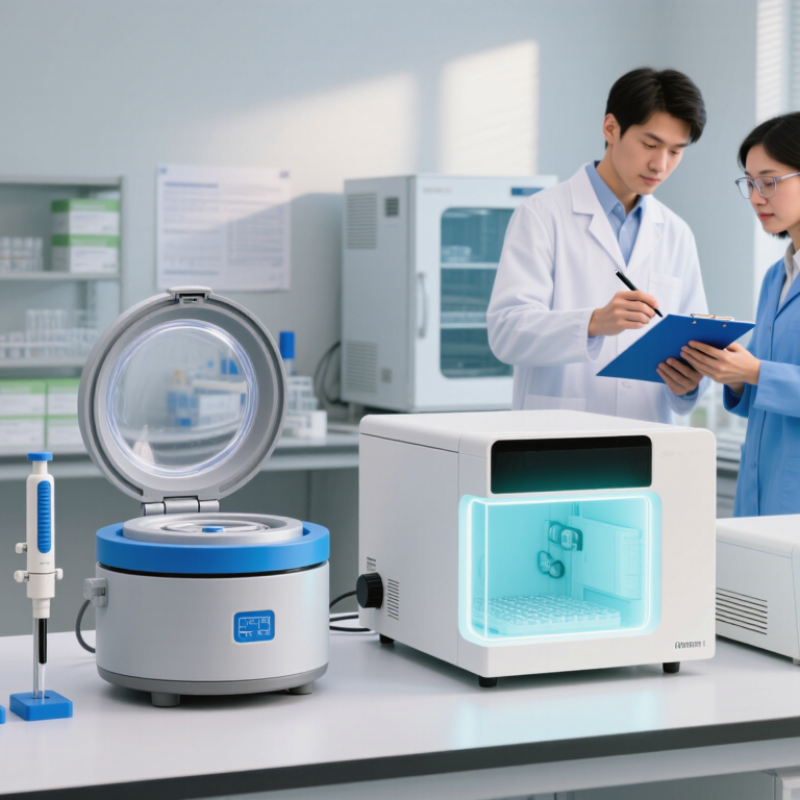
Biomedical research tools span several connected categories, each supporting a different stage of an experiment. Sample-preparation equipment includes centrifuges, homogenizers, pipettes, and cold-storage units. A reliable centrifuge should maintain stable speeds, while clear temperature displays help staff check freezer conditions quickly. Small details matter. Consumables such as tubes, filters, and culture plates also affect workflow; mismatched sizes can waste samples and time.
Cell-culture tools include incubators, biosafety cabinets, and routine monitoring supplies. Molecular biology work may require thermocyclers, electrophoresis systems, and nucleic-acid quantification instruments. For observation, microscopes and imaging systems help researchers compare cell shape, growth, and staining patterns. Analytical tools, including plate readers and chromatography systems, provide measurements that need suitable controls and careful interpretation. Not always simple. A signal can reflect handling variation, not just a biological change.
When comparing suppliers, researchers can check instrument specifications, calibration records, consumable compatibility, and access to technical support. Service documentation is useful when equipment needs troubleshooting or routine maintenance. A low price can look sensible, yet unclear warranty terms may complicate planning. It is worth admitting that no single catalog covers every laboratory need; teams sometimes discover a compatibility gap only after equipment arrives.
How to Evaluate Suppliers in China
China Best Biomedical Research Tools Suppliers?
How to Evaluate Suppliers in China
Choosing a supplier takes more than comparing prices and product photos. Check whether specifications match your protocol: measurement range, repeatability, compatible consumables, and operating conditions. Ask for calibration records, lot traceability, and clear change-notification procedures. The WHO Laboratory Quality Management System handbook identifies 12 quality system essentials, including equipment, purchasing, and documents. Use these areas as a practical checklist, not as proof that a supplier meets every need.
Request a sample unit or a small trial order when practical. Record results under your own lab conditions, such as temperature stability over a full workday or pipette consistency across repeated measurements. Review how quickly the supplier answers technical questions and handles a documented defect. A polished brochure can still hide gaps. A remote audit may also miss real workflow details, so verify critical claims with records and direct checks.
Tips: Compare written specifications, warranty terms, spare-part availability, and delivery estimates side by side. Ask for dated calibration and inspection records. Keep one question open: what evidence would change your decision?
China Biomedical Research Tool Suppliers: How to Evaluate Them
A practical supplier-evaluation framework for comparing biomedical research tool vendors in China. The percentages are suggested buyer-assigned weights, not market-survey results or supplier rankings.
Prioritize product quality and documentation, then assess technical support, supply reliability, product fit, export readiness, and total cost. Adjust the weights to reflect your application, risk requirements, and purchasing priorities.
Leading Supplier Types and Their Specialties
China Best Biomedical Research Tools Suppliers?
Leading Supplier Types and Their Specialties
Biomedical research suppliers in China generally specialize in instruments, reagents, consumables, or laboratory services. Instrument suppliers provide microscopes, centrifuges, and analytical systems; their value depends on calibration support and dependable maintenance. Reagent and consumable suppliers focus on buffers, assay kits, cultureware, and sample-handling products. A chilled shipment arriving on schedule matters as much as a competitive price. Grand View Research estimated the global life science tools market at USD 136.4 billion in 2023, projecting a 7.1% compound annual growth rate from 2024 to 2030 (Life Science Tools Market Size Report, 2024).
Automation and software suppliers help laboratories manage repetitive workflows, instrument data, and sample records. Contract research providers offer specialized testing or study support, useful when a lab lacks equipment or trained staff. Capabilities vary widely, even among suppliers listing similar products. Request current product specifications, quality-control documentation, calibration records, and evidence of technical support. Ask how batches are tracked. Small details matter.
Tips: Match suppliers to the workflow, not just the product name. Check sample compatibility, shipping conditions, and response times before ordering. If possible, test a small quantity first; catalog descriptions can leave practical gaps. A polished brochure is not proof of consistent performance.
How to Select a Supplier for Your Research Needs
Selecting a biomedical research tools supplier starts with the work your lab actually performs. Define the sample types, throughput, accuracy needs, and operating conditions before comparing equipment or consumables. A tool that fits a large facility may be awkward in a small lab. Check measurement ranges, calibration options, compatibility with existing instruments, and the availability of replacement parts.
Supplier quality is more than a product specification sheet. Ask for clear documentation, user training, maintenance guidance, and realistic delivery estimates. If possible, test a sample or arrange a demonstration using a representative workflow. For temperature-sensitive materials, confirm packaging and shipping procedures. Read service terms closely, including response times and warranty limits. Do not rely on polished claims alone; practical support can vary. A short trial may still miss problems that emerge after months of use, so keep that uncertainty in mind.
Tips: Request a written quote with all recurring costs. Compare support and documentation, not just price. Record why each option meets—or fails—your lab’s needs.