Why Is Laboratory Sample Transport Important?

A laboratory result begins before the sample reaches an analyzer. It begins at collection, labeling, packaging, and movement. This is why laboratory sample transport deserves careful attention in every healthcare setting. A delayed tube may produce unreliable findings. A damaged package may compromise safety and trust.

Clinical laboratory expert Dr. James H. Nichols has offered a useful reminder: “The quality of a test result begins with the specimen.” His statement reflects a practical truth. Blood, urine, tissue, and swab samples are not ordinary parcels. They can require controlled temperatures, leak-resistant containers, clear labels, and documented handling. A refrigerated sample left beside a warm loading dock can change before testing begins. Even a small labeling error can create serious confusion.

Good laboratory sample transport connects clinical experience with quality management. Trained staff check identifiers, collection times, storage conditions, and delivery records. Couriers follow defined routes and respond quickly when delays occur. These details protect patients and help laboratories produce dependable results. They also support accountability when a sample must be traced.

Yet the process is not flawless. A label can wrinkle. A courier can wait. A transport box can be packed incorrectly. These ordinary weaknesses deserve honest review, not polished assumptions. Reliable systems learn from near misses and repeated delays. They use monitoring tools, staff training, and clear escalation procedures. In the sections ahead, this article examines why laboratory sample transport matters, how it affects test accuracy, and which practical safeguards make the journey safer.
Why Is Laboratory Sample Transport Important?

What Laboratory Sample Transport Involves

Why Is Laboratory Sample Transport Important?

What Laboratory Sample Transport Involves

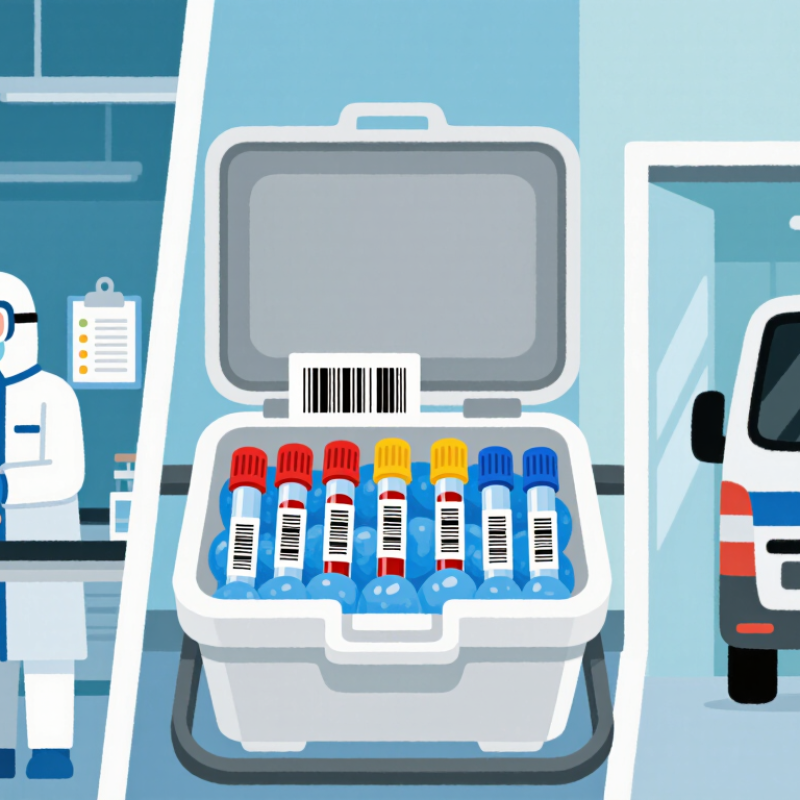
Laboratory sample transport begins before a courier collects the tube. Staff must verify patient details, specimen type, volume, container, and requested test. The sample then needs suitable packaging, labeling, and temperature control. A blood tube may travel in a sealed carrier with a cold pack, while another specimen may require room temperature. Small differences matter.

The World Health Organization’s Guidance on Regulations for the Transport of Infectious Substances 2023–2024 emphasizes risk assessment, leak-resistant packaging, and clear documentation. These controls protect workers and preserve sample quality. Published reviews in Clinical Chemistry and Laboratory Medicine estimate that preanalytical mistakes cause about 46–68% of laboratory errors. Transport is only one part, but it can quietly damage the entire testing process.

A reliable workflow records collection time, dispatch time, arrival time, temperature, and any delay. Staff should inspect cracked tubes, leakage, clotted samples, and incomplete labels before acceptance. Route planning also matters. Traffic, weekend storage, and poorly maintained coolers can change results. The International Organization for Standardization’s ISO 15189:2022 standard requires laboratories to control pre-examination processes, including transport conditions.

The weak point is often human judgment. A package can look secure while its temperature has drifted. Digital tracking helps, but it cannot replace trained inspection. Some procedures remain inconsistent, especially during busy shifts. Reviewing rejected samples and transport deviations can reveal those uncomfortable gaps.

Why Sample Transport Is Essential for Accurate Testing

Why Is Laboratory Sample Transport Important?

Accurate testing begins before a sample reaches the laboratory. During transport, temperature, time, light, and movement can change its condition. A blood tube left in a warm vehicle may produce unreliable results. Time matters. Some specimens require cooling, while others must remain at room temperature. Following validated transport instructions protects the sample’s original composition.

Professional handling also reduces identification and traceability errors. Staff should check the patient details, container type, collection time, and requested test. Secure packaging prevents leakage, breakage, and unnecessary exposure. A clear handoff record shows who collected, moved, and received the specimen. These details support reliable decisions by laboratory professionals and healthcare teams.

Small errors spread. A delayed pickup, missing label, or poorly sealed container can lead to rejection or repeat collection. Even trained teams are not flawless, especially during busy periods. That reality deserves honest review, not blame. Regular temperature checks, transport logs, staff training, and incident reporting can reveal weak points. When a sample arrives clotted, hemolyzed, or unusually warm, the laboratory should assess it carefully rather than force a questionable result. Reliable testing depends on preserving evidence from collection through analysis.

How Temperature and Time Affect Sample Integrity

Why Is Laboratory Sample Transport Important?
How Temperature and Time Affect Sample Integrity
A laboratory sample begins changing when it leaves the patient. Cells continue metabolizing, blood may hemolyze, and analytes can shift during delays. A review in Clinical Chemistry and Laboratory Medicine reported that preanalytical problems represent about 46–68% of laboratory errors. Transport is therefore not a minor delivery step. It is part of the testing process.
Temperature matters because each specimen has a stability window. Refrigeration can slow cellular activity, but it cannot repair a damaged sample. Excessive cold may affect some proteins, while heat can accelerate glucose consumption and bacterial growth. Time matters too. A sample that arrives two hours late may look acceptable, yet produce a clinically misleading result. International laboratory quality guidance, including ISO 15189:2022, requires controlled transport conditions and documented handling. Still, paperwork alone is not enough.
Tips: Define an acceptable temperature range before collection. Use calibrated data loggers, not assumptions. Record collection, dispatch, and receipt times. Protect tubes from direct sunlight and physical shocks. Train couriers to recognize leaks, delays, and temperature excursions. Review rejected samples regularly. A perfect protocol does not guarantee perfect results. Human mistakes remain possible, especially during busy shifts. Reflect on every exception, because a small delay can change a major clinical decision.

Common Risks During Laboratory Sample Transport

Why Is Laboratory Sample Transport Important?

Common Risks During Laboratory Sample Transport

Laboratory sample transport is a pre-analytical process, not a simple delivery task. A tube may leave a collection room correctly, then arrive with altered results. Temperature changes can damage enzymes, hormones, and blood cells. Delays may also reduce analyte stability. A 2015 review in Clinical Chemistry and Laboratory Medicine reported that pre-analytical mistakes account for roughly 60–70% of laboratory errors. Transport remains a major part of that risk.

Physical movement creates quieter problems. Strong shaking can cause hemolysis, while poor packaging may produce leakage or broken containers. Light-sensitive samples need protection from direct exposure. Incorrect labels, missing collection times, and incomplete transport records can make a valid specimen unusable. The WHO Laboratory Quality Management System handbook identifies specimen transport as a controlled laboratory activity. That point is easy to overlook. It should not be.

Tips: Use validated temperature ranges and record them during transit. Define maximum transport times for each specimen type. Secure tubes upright and reduce unnecessary vibration. Check labels against the request form before dispatch. Train staff with practical scenarios, including delayed vehicles and damaged packaging. Review rejected samples monthly; patterns often reveal weak handoffs. A simple checklist helps, but it cannot replace judgment. Even experienced teams miss details when workload rises.

Quality Control and Tracking in Sample Transportation

Laboratory sample transport is a quality-control process, not merely a delivery task. The World Health Organization states that laboratory results influence approximately 70% of clinical decisions. That influence makes every handoff important. A tube exposed to heat, vibration, or excessive delay may produce a result that looks precise but is clinically misleading.

Tracking creates visibility across the entire journey. Staff should record collection time, dispatch time, receiving time, temperature, container condition, and handler identity. Barcode scanning reduces manual transcription, while tamper-evident packaging supports accountability. A 2022 review in Clinical Chemistry and Laboratory Medicine reported that preanalytical problems may represent 60–70% of laboratory errors. Many failures begin before testing starts. Small gaps matter.

Quality teams should monitor rejected samples, missing timestamps, temperature excursions, and delivery delays by location and route. The College of American Pathologists’ Q-Probes studies consistently identify mislabeling, hemolysis, and improper handling as recurring preanalytical risks. These findings should guide corrective action, not decorate a dashboard. In practice, a perfect tracking record can still hide weak packaging or unclear staff training. That limitation deserves attention. Monthly audits, photographed package conditions, and short refresher sessions can reveal problems that software alone misses. Reliable transport depends on evidence, disciplined routines, and the willingness to question familiar processes.

Cell Projects Ltd
Privacy Overview

This website uses cookies so that we can provide you with the best user experience possible. Cookie information is stored in your browser and performs functions such as recognising you when you return to our website and helping our team to understand which sections of the website you find most interesting and useful.