Top DNA Extraction Technology Options for Global Buyers?

In today's rapidly evolving life sciences sector, DNA extraction technology plays a crucial role. As research needs expand, various extraction methods continue to emerge. Buyers face an overwhelming array of options, each with unique features and benefits. Selecting the right technology can significantly impact the results and efficiency of scientific research.

Many factors influence the choice of DNA extraction technology. Quality, speed, and cost are among the most critical considerations. Leading companies offer diverse solutions, ranging from kits for small labs to automated systems for large-scale operations. However, not all technologies are created equal. Users should evaluate their specific needs before making a decision.

As innovation drives the field forward, ongoing challenges remain. The reproducibility of results and sample integrity are areas requiring continuous improvement. Buyers must stay informed about the latest advancements to ensure they invest in solutions that truly meet their needs. Making informed choices in DNA extraction technology can lead to breakthroughs in research and improved outcomes in various applications.
Top DNA Extraction Technology Options for Global Buyers?

The Evolution of DNA Extraction Technologies in the Biotech Industry
Top DNA Extraction Technology Options for Global Buyers?

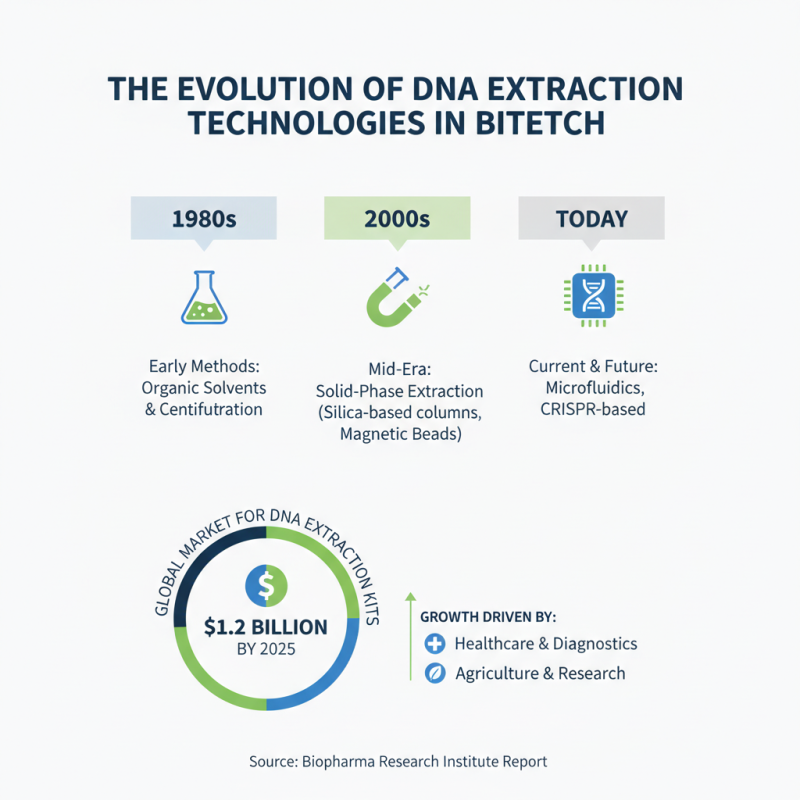
The biotech industry has seen significant advancements in DNA extraction technologies over the past few decades. A report from the Biopharma Research Institute highlights that the global market for DNA extraction kits is projected to reach $1.2 billion by 2025. This growth is driven by the increasing demand for DNA analysis in various sectors, including healthcare and agriculture.

Traditional methods, such as phenol-chloroform extraction, have been largely replaced by more efficient technologies. Modern techniques, like silica-based extraction and magnetic bead methods, provide higher purity and yield. These methods reduce the time required for DNA isolation from hours to mere minutes. However, while these technologies improve efficiency, issues such as the reproducibility of results remain a concern. A recent study noted that up to 15% of extraction attempts might yield inconsistent quality.

Moreover, automation in DNA extraction is transforming laboratory practices. Automated systems can process multiple samples simultaneously, minimizing human error. Yet, the high initial investment and maintenance costs can deter smaller labs. Despite these challenges, innovation continues. Researchers are exploring novel materials, such as nanomaterials, to enhance extraction performance further. The future promises exciting developments, but ensuring reliability across various applications remains an essential focus for the industry.

Key Characteristics of Effective DNA Extraction Methods for Buyers

When selecting DNA extraction technologies, several key characteristics stand out. First, the efficiency and yield of the extraction process are crucial. Methods that maximize DNA recovery often rely on optimized lysis protocols and robust column systems. Ideally, a technique should retrieve high-quality DNA while minimizing contamination risks. The ease of use is equally important. Many labs prefer protocols that require only basic training.

Temperature stability in the extraction process also matters. Effective methods should perform well across various temperatures. This ensures consistent results, particularly in different global settings. Furthermore, the extraction time is a vital factor. Techniques that reduce hands-on time allow researchers to focus on analysis rather than processing.

Reliability cannot be overlooked. Some methods may promise high yields but falter under specific conditions. This variability can lead to delays and lost data. Buyers should seek technologies backed by solid research and user testimonials. Often, the best approach is iterative. Testing various methods on sample types can identify the most suitable technology for a lab's unique needs. This adaptability is essential in a rapidly advancing field.

Market Analysis: Leading DNA Extraction Technologies and Their Applications

The landscape of DNA extraction technologies is diverse and rapidly evolving. Various methods serve distinct applications in research, clinical diagnostics, and biotechnology. Each technology offers unique advantages and limitations, making choice crucial for buyers.

One emerging approach is the use of magnetic beads. These beads allow for efficient separation of DNA from contaminants. They simplify the workflow and can be scaled for high-throughput needs. However, the initial costs might be higher than traditional methods. In contrast, column-based extraction remains popular due to its straightforward protocol. Despite its reliability, this method might result in lower yields for certain samples.

Buyers must weigh factors like yield, purity, and ease of use. Environmental impact and sustainability are pivotal as well. As the market grows, ongoing research aims to refine these processes. It’s essential for buyers to stay informed about advancements to make optimal choices. This dialogue can inspire innovation and drive the industry forward.

Top DNA Extraction Technology Options for Global Buyers

Technology Method Type Yield (%) Time (minutes) Applications
Silica-Based Extraction Column Method 80-90 30 Genetic Testing, Research
CTAB Extraction Liquid-Liquid Phase Separation 70-85 45 Plant DNA, Forensic Analysis
Magnetic Bead Technology Magnetic Separation 85-95 20 Diagnostics, High-Throughput Screening
Phenol-Chloroform Extraction Organic Solvent Extraction 70-80 60 Molecular Biology Applications
Kit-Based Methods Prepackaged Reagents 75-90 30 Small Labs, Education

Cost-Benefit Comparison of Different DNA Extraction Techniques

When choosing DNA extraction technology, cost-effectiveness is crucial. Different techniques yield varying results. Some methods are fast but may produce lower quality DNA. Others may require more time but enhance purity, which might be necessary for sensitive applications.

For instance, spin-column methods are popular due to their efficiency. They streamline protocol steps and minimize contamination. However, their cost may not justify the yield in all situations. In contrast, organic extraction methods can provide higher-quality DNA. Yet, they often demand more reagents and time, influencing overall costs.

Also, some newer technologies promise faster results and higher yields. But they might not always deliver on quality. It’s essential to evaluate these technologies carefully. Each buyer's needs vary based on the type of samples and applications. This complexity demands a cost-benefit analysis to guide decision-making.

Future Trends in DNA Extraction Technologies: Innovations and Improvements

DNA extraction technology is evolving rapidly. Innovations are enhancing efficiency and quality. Automated systems are gaining traction in laboratories. These systems reduce human error and increase sample throughput. Next-generation sequencing requires high-quality DNA. Thus, the focus on purity and yield is critical.

Future trends may include environmentally friendly extraction methods. Biodegradable materials in DNA extraction kits could spark interest. Researchers are increasingly looking for sustainable practices. This reflects a growing awareness of environmental impact.

Tips: Always ensure your samples are free of contaminants. Regularly calibrate your equipment for accuracy. Consider training your team on new technologies to maximize benefits. Embracing advancements can yield significant improvements in DNA quality.

Cell Projects Ltd
Privacy Overview

This website uses cookies so that we can provide you with the best user experience possible. Cookie information is stored in your browser and performs functions such as recognising you when you return to our website and helping our team to understand which sections of the website you find most interesting and useful.