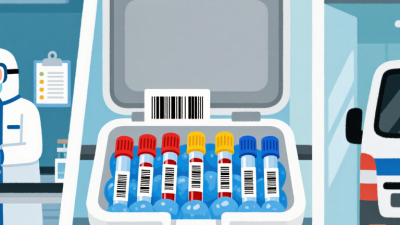
Advanced molecular biology technology refers to tools that reveal, measure, and modify biological processes at molecular scale. It includes next-generation sequencing, CRISPR-based analysis, single-cell omics, spatial transcriptomics, and automated high-throughput workflows. These technologies help researchers examine DNA, RNA, proteins, and cellular behavior with remarkable detail. A tissue sample can now produce millions of molecular measurements. That sounds transformative. It is also easy to overstate.
The National Human Genome Research Institute’s DNA Sequencing Costs dataset shows a dramatic decline in whole-genome sequencing costs. The estimated cost fell from about $95 million in 2001 to roughly $600 in 2022. This change expanded access to genomic research, clinical investigation, and biotechnology development. The World Health Organization’s 2022 human genomics guidance also emphasizes responsible data governance, quality systems, and equitable access. Technology alone does not guarantee reliable outcomes. Sample quality still matters.
In practice, advanced molecular biology technology connects instruments, software, skilled scientists, and carefully designed experiments. For example, a researcher may barcode individual cells, sequence their RNA, and map results back to precise tissue locations. The resulting dataset can reveal rare cell populations or disease-related molecular patterns. Yet reproducibility remains a serious concern. Batch effects, incomplete reference genomes, and inconsistent validation can distort conclusions. Reports from the NHGRI and WHO provide useful benchmarks, but they do not replace laboratory judgment. The field is powerful, rapidly evolving, and imperfect. Good science requires transparent methods, independent confirmation, and cautious interpretation.
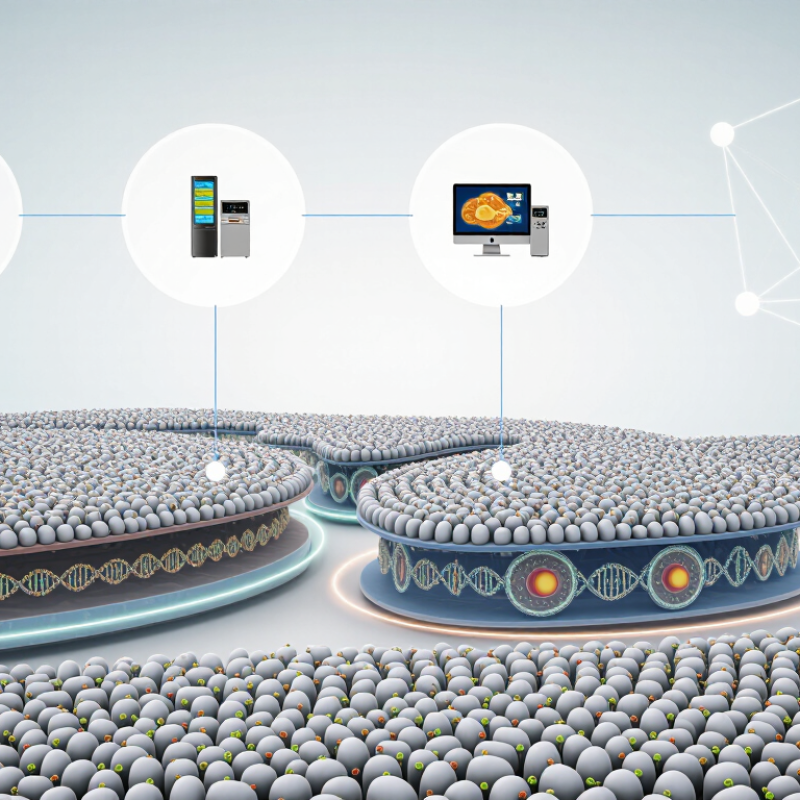
What Is Advanced Molecular Biology Technology?
Definition and Scope of Advanced Molecular Biology Technology
Advanced molecular biology technology refers to tools that examine, measure, and modify biological molecules with high precision. Its scope includes next-generation sequencing, digital PCR, single-cell analysis, spatial omics, and computational interpretation. These methods can reveal genetic variation inside a single cell, not merely across an entire tissue sample.
The progress is measurable. Data from the U.S. National Human Genome Research Institute show that sequencing a human genome fell from about 100 million dollars in 2001 to nearly 1,000 dollars in recent years. That change expanded research access. It also created new problems. Lower cost does not guarantee accurate sampling, meaningful interpretation, or fair clinical use.
Advanced platforms now connect laboratory workflows with automation, artificial intelligence, and cloud-based analysis. A 2023 report from the International Society for Pharmaceutical Engineering identified data integrity, validation, and process control as continuing priorities in biomanufacturing. Small errors matter. A contaminated sample, weak control, or biased reference database can distort an entire conclusion. In practical work, reliable technology therefore means more than faster instruments. It requires trained scientists, transparent methods, quality controls, and independent verification. The field is powerful, but its limits remain easy to underestimate.
Advanced molecular biology technology begins with a simple rule: biological questions require measurable evidence.
DNA stores information, RNA carries instructions, and proteins perform cellular work. Modern experiments test these relationships with polymerase chain reaction, quantitative PCR, sequencing, and targeted genome editing. Each method depends on specificity, sensitivity, and carefully selected controls.
Controls matter. A blank tube can reveal contamination before expensive sequencing begins.
The National Human Genome Research Institute reports that sequencing one human genome fell from about 2.7 billion dollars in 2003 to below 1,000 dollars in recent years. This change made high-throughput sequencing practical for research laboratories, clinical studies, and population analysis. Yet lower costs do not guarantee reliable results.
70%
A 2016 Nature survey of 1,576 researchers found that more than 70% had failed to reproduce another scientist’s experiment.
That finding still deserves attention. In practice, researchers should document sample temperature, reagent lots, cycle thresholds, and failed trials. Small details can change a molecular signal.
qPCR requires stable reference genes, while sequencing needs adequate coverage and unbiased library preparation. Genome editing also requires off-target checks and independent validation. No protocol is perfect. Experimental judgment remains essential, especially when clean-looking data conflicts with biological variation.
What Is Advanced Molecular Biology Technology?
Key Instruments and Analytical Techniques
Advanced molecular biology technology turns invisible biological events into measurable evidence. qPCR instruments track fluorescence during amplification. Next-generation sequencing reads millions of DNA fragments in parallel. Automated liquid handlers improve repeatability, but they cannot repair poor sample quality. The National Human Genome Research Institute reports that human genome sequencing costs fell from about $100 million in 2001 to roughly $1,000 by 2015. This change expanded access to complex experiments. However, interpretation still demands skilled personnel and careful controls.
Technique selection should follow the biological question, not laboratory fashion. Use qPCR for targeted quantification and electrophoresis for fragment inspection. Flow cytometry measures cell-level features across large populations. NGS supports variant discovery, transcript analysis, and microbial profiling. Mass spectrometry adds molecular-weight and abundance data. Sample preparation can still introduce quiet bias. MarketsandMarkets’ 2024 report projects the next-generation sequencing market to grow from about USD 9.4 billion in 2024 to USD 20.1 billion by 2029. Forecasts indicate demand, not guaranteed scientific quality. I have seen attractive plots conceal weak extraction steps. That mistake remains easy to repeat.
Tips: Define the endpoint before choosing hardware. Keep positive, negative, and process controls. Record lot numbers, run dates, thresholds, and failed runs. Inspect raw data before accepting software-generated results. Leave room for uncertainty.
Advanced molecular biology combines instruments such as thermal cyclers, real-time PCR systems, microplate readers, capillary electrophoresis platforms, and digital PCR systems to amplify, detect, separate, and quantify DNA or RNA.
The chart shows representative parallel processing capacity for commonly used formats. Values are method-dependent: well-based instruments process reactions in wells, capillary electrophoresis commonly analyzes one sample at a time, and droplet digital PCR partitions one reaction into approximately 20,000 droplets for highly sensitive quantification.
Advanced molecular biology technology examines life at the level of genes, transcripts, proteins, and single cells. Modern sequencing, CRISPR-based editing, spatial analysis, and high-throughput screening reveal changes that ordinary microscopy cannot show. A tissue sample can now produce thousands of molecular signals, sometimes from individual cells.
In research, these tools map disease pathways and test biological hypotheses faster. Single-cell sequencing can separate immune cells that look identical under a microscope. Yet large datasets do not automatically create reliable knowledge. Careful controls, independent replication, and transparent analysis remain essential. That part is often underestimated.
Medicine uses molecular diagnostics to detect mutations, monitor infections, and guide treatment decisions. The World Health Organization reports that noncommunicable diseases cause about 41 million deaths annually, representing roughly 74% of global deaths. Better molecular profiling may support earlier intervention, although access and clinical validation remain uneven. A promising biomarker is not a proven therapy.
Biotechnology applies these methods to vaccine research, agricultural traits, enzyme design, and sustainable manufacturing. The OECD identifies biotechnology as a growing contributor to innovation, supported by expanding research investment and patent activity. However, technical progress can outpace regulation and workforce training. Mistakes happen. Contamination, sampling bias, and poorly designed controls can distort an entire project. The strongest laboratories treat quality assurance as part of discovery, not paperwork added afterward.
Advanced molecular biology technology is moving from isolated experiments toward integrated, data-rich workflows. NHGRI’s DNA Sequencing Costs database shows a dramatic decline, from about $100 million for a human genome in 2001 to roughly $600 in 2022. This shift supports faster variant analysis, single-cell studies, and real-time pathogen monitoring. However, cheaper sequencing does not guarantee better conclusions. Sample quality, contamination, and incomplete reference genomes still influence results. Small errors can travel quietly through an entire analysis.
Emerging platforms now combine long-read sequencing, spatial transcriptomics, synthetic biology, and machine learning. The 2023 OECD Science, Technology and Innovation Outlook identifies biotechnology convergence as a major research trend, especially where biology meets computing and engineering. Yet data standards remain uneven across laboratories. The WHO global genomic surveillance strategy also highlights unequal sequencing capacity between regions, limiting fair access to timely biological insights. Advanced tools need stronger validation, transparent metadata, and trained personnel. They also require careful control of privacy and research governance. The numbers look clean. Laboratory reality is not. A model may predict a protein structure accurately, yet fail when a sample contains unusual chemistry. Researchers should report uncertainty more openly. That practice remains inconsistent.
| Technology | Primary Molecular Question | Main Readout | Typical Resolution or Scale | Key Advantages | Important Technical Challenges | Emerging Developments |
|---|---|---|---|---|---|---|
| Long-Read DNA Sequencing | How are large genomic regions, structural variants, repetitive sequences, and haplotypes organized? | Continuous DNA sequence reads, often including methylation signals when the chemistry supports direct detection. | Reads commonly range from several kilobases to tens of kilobases; ultra-long protocols can produce reads substantially longer than this. | Improves resolution of structural variants, repetitive regions, full-length transcripts, and phased genomes. | Raw read accuracy, DNA quality requirements, computational storage, coverage uniformity, and higher per-sample cost in some workflows. | Higher-accuracy long reads, improved haplotype phasing, direct RNA analysis, and integrated detection of sequence and epigenetic signals. |
| Single-Cell RNA Sequencing | Which cell types are present, and how does gene expression differ among individual cells? | Gene-expression profiles assigned to individual cells or nuclei; some methods also measure immune-receptor sequences or chromatin accessibility. | Single-cell or single-nucleus resolution; experiments may profile thousands to millions of cells, depending on workflow and study design. | Reveals cellular heterogeneity, rare populations, developmental trajectories, and disease-associated cell states. | Dropout from low transcript capture, dissociation-induced stress, batch effects, ambient RNA, and difficulty comparing data across protocols. | Multi-omic measurements from the same cell, higher-throughput combinatorial indexing, improved cell-state annotation, and analysis of intact tissues through nuclei-based methods. |
| Spatial Transcriptomics | Where are transcripts located within a tissue, and how do neighboring cells interact? | Spatially indexed RNA-expression profiles mapped to tissue coordinates; some platforms provide targeted or near-transcript-level imaging. | From approximately micrometer-scale imaging to tens-of-micrometers capture regions, depending on the method. | Preserves tissue architecture and connects gene expression with cell location, morphology, and local microenvironments. | Trade-offs between spatial resolution, transcript coverage, sensitivity, tissue preservation, imaging capacity, and computational image registration. | Higher-resolution in situ sequencing, integration with single-cell reference maps, spatial measurement of proteins and chromatin, and three-dimensional tissue profiling. |
| CRISPR-Based Genome Editing | What is the effect of a targeted genetic change on a cell, organism, or molecular pathway? | Targeted sequence alterations, gene disruption, base substitutions, or programmable gene regulation. | Single-nucleotide to multi-kilobase scale, depending on the editor, repair pathway, and delivery method. | Programmability, multiplexing potential, and suitability for functional screens and mechanistic studies. | Off-target activity, unintended large deletions or rearrangements, variable editing efficiency, delivery barriers, immune responses, and incomplete control of repair outcomes. | Base and prime editing, compact guide systems, improved specificity prediction, epigenome editing, and pooled perturbation screens combined with single-cell readouts. |
| Single-Molecule and Real-Time Analysis | How do individual nucleic-acid or protein molecules behave over time rather than as a population average? | Real-time fluorescence, molecular movement, binding events, enzymatic activity, or conformational changes from individual molecules. | Single-molecule resolution; temporal resolution ranges from milliseconds to minutes depending on the instrument and assay. | Detects molecular heterogeneity, transient states, kinetic behavior, and rare events hidden by ensemble measurements. | Photobleaching, phototoxicity, surface-induced artifacts, limited observation duration, low signal-to-noise ratios, and complex data analysis. | Improved fluorescent labels, label-free detection, high-density single-molecule assays, and integration with force spectroscopy or microfluidics. |
| Chromatin Accessibility and Epigenomic Profiling | Which regulatory regions are accessible, modified, or physically associated with genes? | Chromatin accessibility, DNA methylation, histone modifications, transcription-factor occupancy, or three-dimensional genome contacts. | Base-pair to kilobase-scale genomic mapping; single-cell versions provide cell-state resolution but generally lower signal per cell. | Connects regulatory DNA, chromatin structure, and gene activity across development, disease, and cellular differentiation. | Low input quantity, incomplete antibody specificity, sequence bias, cell-type heterogeneity, and difficulty distinguishing correlation from causal regulation. | Joint profiling of chromatin and RNA, direct methylation detection, single-cell multi-omics, and higher-resolution chromosome-conformation measurements. |
| Spatial and Single-Cell Proteomics | Which proteins are present, in what abundance, and in which cellular or subcellular locations? | Protein identities, relative or absolute abundance estimates, post-translational modifications, and spatial protein distributions. | Single-cell to subcellular resolution for imaging-based methods; mass-spectrometry approaches can provide broad molecular coverage. | Measures functional molecules more directly than RNA and can reveal signaling states, protein complexes, and post-translational regulation. | Dynamic range, incomplete proteome coverage, antibody validation, ion suppression, limited throughput, and challenging quantification of low-abundance proteins. | Highly multiplexed imaging, antibody-free spatial measurements, improved targeted proteomics, and integrated RNA-protein assays. |
| Organoid and Organ-on-Chip Models | How do human cells organize, communicate, and respond to perturbations in a three-dimensional or tissue-like environment? | Cell morphology, differentiation, barrier function, electrophysiology, secreted factors, imaging phenotypes, and molecular profiles. | Micrometer-scale cellular features within millimeter-scale model systems; culture duration ranges from days to months depending on the model. | Provides more physiologically relevant cell interactions than many two-dimensional cultures and supports controlled perturbation studies. | Batch-to-batch variability, incomplete maturation, limited vascularization or immune components, material effects, and imperfect representation of whole-organ physiology. | Perfused vascular systems, immune-cell integration, patient-derived models, automated imaging, and coupling with single-cell multi-omics. |
| High-Throughput Functional Screening | Which genes, regulatory elements, compounds, or molecular interactions control a biological phenotype? | Enrichment or depletion of perturbations, reporter signals, cell survival, morphology, or single-cell molecular states. | Hundreds to millions of perturbation measurements, depending on library size, assay format, and readout. | Enables systematic discovery of gene function, pathway relationships, resistance mechanisms, and genotype-phenotype links. | Library representation, false positives and negatives, delivery efficiency, off-target effects, assay-specific bias, and difficulty validating context-dependent results. | CRISPR interference and activation screens, perturbation coupled with single-cell sequencing, spatial perturbation assays, and machine-learning-assisted hit prioritization. |
Note: Performance ranges are representative technical values. Actual results vary with sample quality, assay chemistry, instrument configuration, experimental design, and bioinformatics processing.