
Top Biotech Laboratory Consumables Suppliers in China?
Choosing a supplier for biotech laboratory consumables is not just a price comparison. A box of pipette tips, sterile tubes, or culture plates can affect daily workflow, sample handling, and confidence in experimental results. Buyers in China also face a broad market, with established manufacturers and newer suppliers offering products at different quality levels. The details matter.
Quality-management expert W. Edwards Deming offered a useful principle: “In God we trust; all others must bring data.” It is not a biotech-specific quote, but it fits supplier evaluation. Ask for product specifications, batch records, sterility information where relevant, and clear documentation of material and manufacturing controls. Check whether a supplier can explain its quality process—not merely promise “premium quality.” Small differences can matter.
This overview examines leading Chinese suppliers of biotech laboratory consumables, including their product ranges, manufacturing strengths, and support for research and life-science laboratories. It also considers practical checks, such as packaging integrity, lot traceability, and responsiveness to technical questions. A glossy catalogue is not proof. Neither is a low quote. Supplier information can be incomplete, and rankings may not capture every lab’s needs. That deserves a careful look.
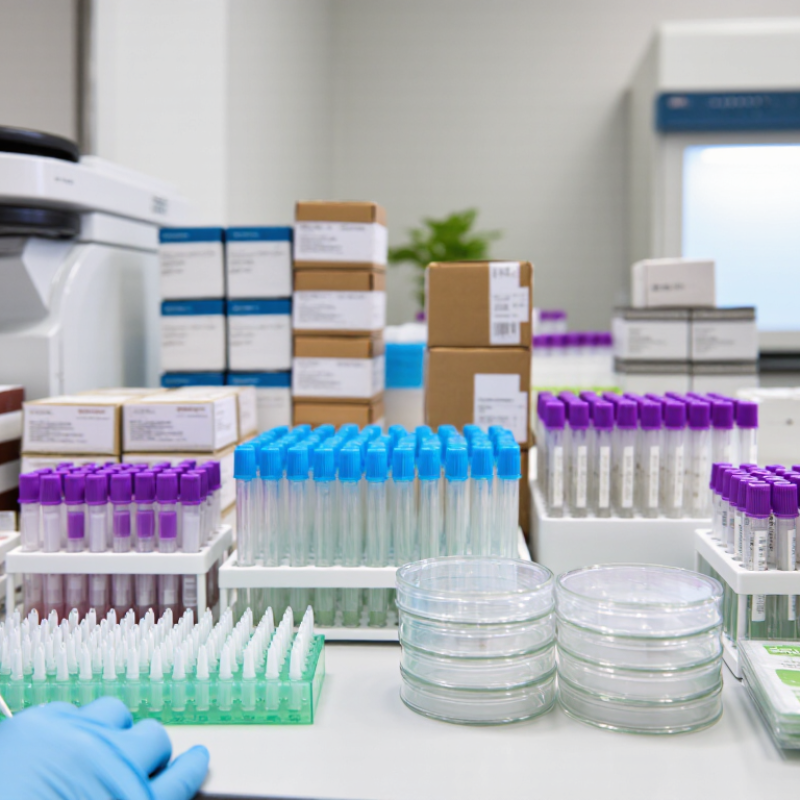
What Biotech Laboratory Consumables Include
Top Biotech Laboratory Consumables Suppliers in China?
What Biotech Laboratory Consumables Include
Biotech laboratory consumables are the disposable and reusable items used to handle samples, grow cells, and run assays. Common examples include pipette tips, microcentrifuge tubes, culture flasks, multiwell plates, filters, gloves, and sample-storage vials. Each item has a specific job. A low-retention tip helps transfer a small liquid volume; a sterile, treated plate supports consistent cell attachment. Small differences matter.
MarketsandMarkets’ 2023 laboratory consumables report estimated the global market at about US$17.8 billion, with a forecast of US$25.4 billion by 2028. The report groups products across general, specialty, and safety consumables, reflecting how varied a lab’s purchasing needs can be. For biotech work, buyers should check material compatibility, sterility claims, dimensional fit, and batch traceability—not just unit price. A tube that fits one centrifuge may not suit another. Details get missed.
Consumables also shape daily workflow. Filter pore size can affect sample recovery, while plate geometry may influence liquid handling and edge evaporation. Packaging matters too: individually wrapped items can reduce exposure during setup, but create more waste. There is no perfect choice. Teams should match specifications to their protocols, review certificates and lot records, and test new supplies before routine use. Even careful labs sometimes discover that a familiar-looking product behaves differently.
Top Biotech Laboratory Consumables Suppliers in China? – What Biotech Laboratory Consumables Include
Biotech laboratory consumables are disposable or routinely replaced items used in research, diagnostics, cell culture, and molecular biology. The table summarizes common product categories and practical checks for evaluating suppliers, without ranking or naming companies.
| Consumable Category | Common Items | Typical Materials or Formats | Typical Biotech Uses | Supplier Evaluation Checks |
|---|---|---|---|---|
| Pipette tips | Standard tips, filter tips, low-retention tips | Usually polypropylene; multiple volumes and rack formats | Liquid handling, PCR setup, sample preparation | Fit with pipettes, volume accuracy, sterility options, and documented contamination-control claims |
| Microcentrifuge tubes | Snap-cap tubes, screw-cap tubes, conical-bottom tubes | Commonly polypropylene; capacities often range from fractions of a milliliter to a few milliliters | Sample storage, centrifugation, extraction, and reaction preparation | Cap closure, stated temperature limits, rotor compatibility, and lot traceability |
| PCR and qPCR plastics | PCR tubes, strips, plates, sealing films, optical seals | Typically polypropylene reaction vessels; optical formats designed for fluorescence measurement | PCR, qPCR, and other nucleic-acid amplification workflows | Instrument compatibility, sealing performance, optical clarity where needed, and nuclease-control documentation |
| Cell cultureware | Culture flasks, dishes, multiwell plates, cell culture tubes | Often polystyrene; treated surfaces are available to support cell attachment | Routine cell growth, screening, microscopy, and cell-based assays | Surface treatment, vessel geometry, sterility assurance, packaging integrity, and consistency between lots |
| Serological pipettes | Graduated pipettes in assorted volumes | Commonly polystyrene; individually wrapped sterile options are available | Aseptic transfer and measurement of cell culture media and other liquids | Graduation readability, volume accuracy, packaging, and compatibility with pipette controllers |
| Filters and filtration units | Syringe filters, vacuum filtration units, membrane discs | Membranes may include PES, PVDF, nylon, or PTFE; pore size and housing vary by product | Clarification, sample preparation, and filtration of compatible solutions | Membrane compatibility, pore size, flow characteristics, extractables information, and suitability for the intended sample |
| Gloves and protective disposables | Disposable examination gloves, sleeves, protective covers | Gloves commonly made from nitrile, latex, or vinyl, depending on the product | Personal protection and reduction of sample or workspace contamination | Material, size range, relevant safety documentation, and compatibility with the chemicals handled |
| Storage and cryogenic consumables | Storage tubes, cryovials, tube racks, freezer boxes | Materials and temperature limits vary; cryogenic products are designed for specified low-temperature conditions | Short- and long-term storage of biological samples and reagents | Temperature rating, seal integrity, labeling area, storage-system fit, and clear product instructions |
Note: Product specifications vary by item and manufacturer. Confirm the intended application, material compatibility, applicable certifications, and validation documents directly with the supplier before purchase.
Related Posts
-

Top 10 DNA Stabilization Technology Solutions for Global Buyers?
-

Top Biomedical Research Tools for Global Buyers
-
Discover the Best Electroporation Technology Systems in China?
-

How to Choose the Best DNA Analysis Workflows?
-
2026 Top Biological Sample Preservation Methods?
-
What Are the Top PCR Technology Systems in 2026?