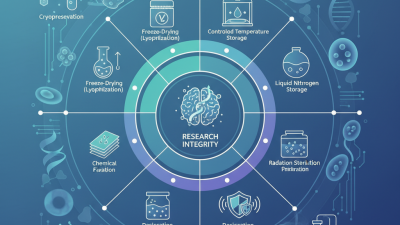
Choosing a DNA stabilization technology in 2026 is not just a purchasing decision. It affects sample integrity, workflow speed, shipping conditions, and the reliability of downstream analysis. A tube may sit for days in a warm delivery van, or for years in a freezer. Those are very different demands.
The scale of biobanking makes this choice increasingly consequential. Grand View Research’s 2024 biobanking market analysis estimates that the global market reached approximately USD 76 billion in 2023, reflecting substantial investment in biological sample infrastructure. That figure covers more than DNA preservation, so it should not be mistaken for a measure of stabilization demand alone. Still, it highlights the operational context: more samples, more sites, and greater pressure to maintain consistent quality. ISBER’s Best Practices also emphasize documented procedures, traceability, and controlled storage—principles that apply when comparing liquid buffers, dried formats, and other stabilization approaches.
Performance claims need scrutiny. A product’s stated shelf life may depend on sample type, temperature, extraction method, and the assay used to assess DNA quality. Small print matters. Compare evidence from validation studies, not just brochures: look for recovery yield, fragment integrity, contamination controls, compatibility with intended tests, and performance after realistic transport. Ask whether independent laboratories reproduced the results. No method is perfect. A stabilization system that simplifies shipping may add preparation steps or costs elsewhere. The best DNA stabilization technology is therefore the one that fits the full sample journey, with evidence strong enough to support your specific workflow.
Start by defining the sample, not by comparing product claims. Whole blood, saliva, swabs, and tissue differ in volume, cell content, and contamination risk. A method suited to a saliva tube may not preserve a small tissue biopsy equally well. Note how much DNA you need, which tests will follow, and whether the sample must remain intact for sequencing or another analysis.
Small details matter.
Map the sample’s path from collection to testing. Will staff process it within hours, or will it travel overnight? Will collection happen in a clinic, a field site, or a temperature-controlled laboratory? Stabilization requirements change with these conditions. Check compatibility with extraction equipment and downstream assays, since some buffers can affect later steps if they are not removed properly.
Cold rooms vary.
Set storage limits before choosing a technology. Define the expected temperature range, storage duration, shipping delays, and available freezer space. A room-temperature format may simplify transport, but it still needs evidence for your sample type and intended holding period. Compare published stability data with your real workflow, then test representative samples using the same collection and extraction steps. One limitation is easy to overlook: a controlled pilot may not capture every handling mistake. Record those exceptions, too.
Choosing DNA stabilization technology means comparing how each method controls moisture, temperature, and chemical damage. Freezing slows degradation, but samples need a reliable cold chain. A freezer failure can compromise weeks of careful collection. For clinics or field studies, that risk matters.
Dry-state methods remove or bind water, helping DNA remain stable during room-temperature storage. They can reduce shipping and freezer needs, though humidity and packaging still require attention. Stabilizing buffers take another approach: they preserve DNA in a liquid sample by limiting nuclease activity. Their performance depends on the sample type, storage temperature, and time before extraction. No method is maintenance-free.
Match the preservation method to the real workflow. A remote collection site may favor a dry format; a laboratory with validated freezers may prefer frozen storage. Compare stability data for the specific sample, not just DNA in general. Check whether the method supports your extraction and downstream tests, and follow its storage limits. Small handling differences matter. I would also question claims of “room-temperature stability” unless the conditions and duration are clearly stated. Even strong preservation can’t fix poor collection or a leaking tube.
DNA stabilization works only when the chemistry fits both the specimen and its journey. Whole blood, saliva, tissue, and dried blood spots differ in water content, cell mix, and contamination risk. A buffer validated for saliva may inhibit downstream testing on tissue. A neat-looking tube can still be a poor match. Check the intended assay, collection device, and expected storage period before choosing a preservative.
Storage conditions matter just as much. ISBER’s 2023 Best Practices distinguishes common storage ranges such as −20°C, −80°C, and vapor-phase liquid nitrogen; they are not interchangeable. The NCI’s 2016 Best Practices for Biospecimen Resources emphasizes recording processing time, storage temperature, and freeze-thaw history. These details help explain inconsistent DNA yield or integrity later. Ambient shipping may suit stabilized saliva, while fresh tissue usually needs prompt processing and controlled cooling. Validate the full route, not just the freezer.
Tips: Test a small set of representative samples under real shipping and storage conditions. Record temperature excursions and freeze-thaw counts. Compare DNA yield and fragment quality with the downstream assay. Small pilot studies take time, admittedly, but skipping them can create avoidable surprises.
Typical storage-temperature setpoints for common DNA sample workflows
Match the stabilization approach to the sample and the planned storage conditions. These temperatures are representative practices, not guaranteed stability limits; actual requirements depend on the collection method, buffer, moisture control, storage duration, and validated protocol.
Choosing DNA stabilization technology in 2026 starts with the sample, not the brochure. A blood collection workflow differs from saliva kits mailed over several days. Compare the full cost per usable sample, including tubes, shipping, storage, staff time, and repeat collections. A low purchase price can hide expensive failures.
Usability matters on busy collection days. Can staff add the right volume without extra equipment? Are labels readable, instructions clear, and containers secure when handled? Small details matter. Check safety documentation, required protective equipment, spill procedures, and disposal guidance before adoption. Test the workflow with the people who will actually use it; a protocol that looks simple on paper may feel awkward at a crowded clinic.
Downstream testing should guide the final choice. Ask whether stabilized DNA performs reliably in the intended extraction and analysis methods, and request data for the relevant sample type. Compare yield, purity, and consistency across realistic storage times—not just ideal laboratory conditions. I would be cautious about choosing from one impressive result. It is easy to overlook variability between users and batches. A small pilot can expose that gap, though it adds time and cost. No option is perfect; document the trade-offs and decide which failures would be hardest to tolerate.
Choosing a DNA stabilization technology starts with the sample and its journey. Blood, saliva, swabs, and tissue behave differently after collection. Define the expected storage time, shipping temperatures, and downstream method before comparing options. A workflow for short-term room-temperature transport may not suit long-term archiving. Neither may a method designed for one sample type. Small details matter: collection volume, tube fill level, and time before mixing can affect consistency.
Validate the leading option using real samples and realistic handling conditions. Split matched samples between the candidate method and your current process, then compare DNA yield, fragment integrity, and performance in the intended assay. Include temperature excursions if they could occur during transport. Check results across multiple donors or sample batches; one clean run is not proof. For sequencing, review usable library output, not just extracted DNA concentration. For PCR, examine amplification consistency and inhibition. Keep records of storage times and deviations. A tidy protocol can still fail on a busy collection day. That deserves a second look. Re-test after changing containers, extraction steps, or storage limits, and document the conditions that support your decision.
| Technology | How it stabilizes DNA | Typical storage conditions | Strengths | Limitations and risks | Best-fit applications | Validation priorities |
|---|---|---|---|---|---|---|
| Aqueous buffer, refrigerated | Keeps DNA dissolved in a buffered solution; a low-EDTA buffer can reduce nuclease activity while limiting interference with some assays. | Usually 2–8°C for short-term holding. Define the permitted duration for the specific sample and assay. | Ready to pipette; convenient for routine workflows and frequent access; no drying or rehydration step. | Not ideal for extended storage; contamination, evaporation, and nuclease exposure can affect quality. EDTA may inhibit enzyme-based assays if carried over at excessive levels. | Short-term laboratory use, near-term testing, and samples that need immediate access in solution. | Measure DNA yield, purity, and assay performance over the intended hold time; test buffer carryover in the downstream reaction. |
| Frozen aqueous storage at −20°C | Slows chemical degradation and nuclease activity by lowering temperature. | Commonly used for routine DNA storage. Use sealed tubes and aliquots where repeated access is expected. | Widely available; straightforward to implement; suitable for many routine purified-DNA workflows. | Freezer excursions and repeated freeze–thaw cycles can affect sample quality. Requires dependable freezer capacity and monitoring. | Routine research samples and working stocks with established cold-chain access. | Assess freeze–thaw tolerance, temperature excursion limits, tube sealing, and performance in the intended downstream assay. |
| Deep-frozen aqueous storage at −80°C | Further reduces temperature-dependent degradation compared with warmer storage. | Used for longer-term storage when deep-freezer infrastructure and monitoring are available; define duration through stability studies. | Provides a low-temperature option for valuable or infrequently accessed samples; can support long-term archives when properly managed. | Higher equipment and energy requirements; power failure or freezer malfunction can create significant risk. Repeated freeze–thaw cycles remain undesirable. | Reference materials, infrequently accessed archives, and samples for which deep-freezer infrastructure is justified. | Establish monitoring and excursion procedures; test integrity, concentration, and functional assay performance at planned time points. |
| Drying on a porous matrix | Immobilizes DNA in a dry matrix, reducing the water available for hydrolysis and many degradation processes. | After drying, store sealed and protected from moisture; temperature and validated storage duration depend on the matrix and packaging. | Can reduce cold-chain dependence and simplify transport; useful for small-volume samples and field collection workflows. | Recovery may be incomplete or variable; moisture ingress, sample loading, and matrix chemistry can affect performance. Not every downstream method accepts the matrix directly. | Transport, field sampling, and workflows where reducing liquid handling or refrigeration is important. | Compare recovery and assay success against a fresh reference; test humidity exposure, packaging integrity, and rehydration or extraction steps. |
| Dry storage with a desiccant | Maintains a low-moisture environment around dried DNA, limiting moisture-related degradation. | Use a sealed moisture-barrier package with an appropriate desiccant; control and document storage humidity and temperature. | May support ambient or temperature-controlled storage without keeping DNA frozen; packaging can be compact and transport-friendly. | A desiccant does not by itself guarantee DNA stability. Seal failure, inadequate drying, or repeated opening can raise moisture levels and reduce performance. | Dried purified DNA for distribution or storage where cold-chain access is limited and packaging can be controlled. | Validate residual moisture, package seal performance, shipping conditions, recovery, and downstream functional performance. |
| Lyophilization (freeze-drying) | Removes water by freezing and sublimation; formulations may include stabilizing excipients selected for the sample and intended use. | Store the dried product in a moisture-protective, sealed container under conditions established by product-specific stability testing. | Can produce a dry, transportable format and may improve storage practicality when the formulation and process are well controlled. | Requires specialized equipment and process development; drying and reconstitution can affect recovery. Excipients may interfere with some applications. | Standardized kits, distributed reference materials, and applications needing a defined dry formulation. | Validate process consistency, residual moisture, reconstitution, DNA integrity, batch variability, and compatibility with the final assay. |
| Selection and validation note | ||||||
| Treat storage durations as application-specific rather than guaranteed shelf lives. Validate with representative DNA types and concentrations, realistic shipping or temperature excursions, planned access frequency, and the actual downstream assay. Track both DNA integrity and functional usability; a concentration or purity reading alone may not reveal assay-relevant damage. | ||||||